

For a long time, wealth announced itself very clearly.
It sat on a tarmac with wings.
It idled quietly in a driveway with a Spirit of Ecstasy on the bonnet.
It was moored in Monaco, polished, photographed, and unmistakably owned.
Ownership was the proof.
But something has been changing—slowly, almost politely—at the very top of the global wealth pyramid.
Today’s ultra-high-net-worth individual doesn’t necessarily want more assets.
They want less responsibility.
They are trading ownership for access.
Not casual access. Seamless access.
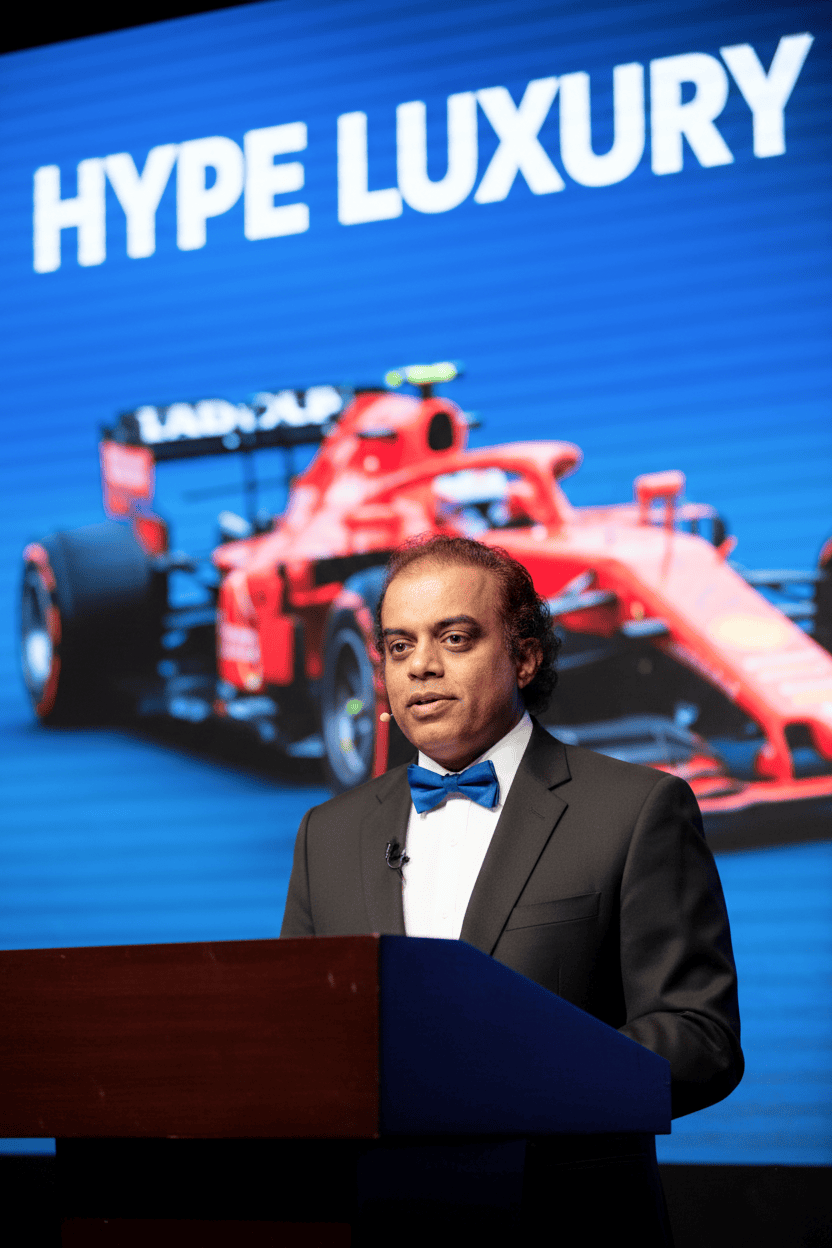
And it’s in this shift that Raaghav Belavadi, the founder of Hype Luxury, has found his thesis.
When Ownership Becomes Friction
Belavadi’s insight is deceptively simple: the asset has become secondary to the experience around it.
A Gulfstream is impressive—until it isn’t available.
A Rolls-Royce is exquisite—until the chauffeur doesn’t arrive.
A yacht is magnificent—until the logistics collapse under their own weight.
For a generation of globally mobile billionaires, ownership now carries friction: maintenance, staffing, compliance, coordination. And friction, at that level of life, is the one thing money is meant to eliminate.
Hype Luxury was built around this realisation.
By aggregating access to 21,000 private jets, 2,300 yachts, and more than 34,000 luxury vehicles globally, Belavadi isn’t trying to impress anyone with scale. He’s trying to solve a reliability problem in a fragmented luxury ecosystem.
A Familiar Pattern in History
This isn’t the first time luxury has had to adapt to a change in how the world moves.
In the mid-19th century, Louis Vuitton noticed something others missed: steam travel had made traditional luggage impractical. His response wasn’t decoration—it was design. Flat-topped trunks that could stack, travel, and endure.
Similarly, when automobiles were still temperamental machines, Henry Royce didn’t chase speed or flair. He chased reliability. That focus quietly defined Rolls-Royce for generations.
Belavadi’s approach follows the same logic.
The mode of consumption has changed.
The infrastructure around luxury hasn’t caught up.
The Moment That Made It Personal
Like many founders, Belavadi’s idea didn’t begin with a pitch deck. It began with a failure.
A premium car service failed to show up for his parents’ anniversary. Nothing catastrophic—just a missed pickup. But in luxury, small failures are magnified. They break trust.
What struck him wasn’t the absence of cars, but the absence of accountability.
Luxury mobility, he realised, was a patchwork of local operators, inconsistent standards, and too many handoffs. The asset existed. The assurance did not.
That gap—between promise and delivery—is where Hype Luxury positions itself.
“The asset matters less than the seamlessness of the experience,” Belavadi has said. And in practice, that philosophy defines the platform. Whether it’s a jet, a car, or a yacht, the expectation is simple: it should be there, exactly when it’s meant to be, without explanation.
An Unfashionable Idea: Less Access, Not More
At a time when most platforms chase scale through democratisation, Belavadi has taken a contrarian view.
He is not interested in turning luxury into volume.
“Sharing a private jet with six strangers,” he once remarked, “is no different from taking a government bus.”
That belief is embedded in Hype Luxury’s invitation-only 0.1% Club—a deliberate digital velvet rope. The aim isn’t elitism for its own sake. It’s preservation.
Privacy.
Discretion.
Continuity.
As the platform grows, the experience isn’t diluted. It’s protected.
Building the New Infrastructure of Prestige
If the 20th century was about creating the objects of luxury, the 21st may be about building the systems that quietly make them available.
Hype Luxury is less marketplace than operating system.
A client can move from London to Monaco, step into a waiting Rolls-Royce, and later board a chartered yacht—all coordinated through a single interface, without re-explaining themselves at each stage.
It’s not spectacle. It’s absence.
Absence of friction.
Absence of repetition.
Absence of stress.
Whether this model can maintain its standards at global scale remains an open question. Luxury has always struggled with growth.
But if it succeeds, Raaghav Belavadi won’t be remembered for renting jets or cars. He’ll be remembered for something more subtle: re-architecting how prestige works in a world where time—not money—is the rarest currency.