

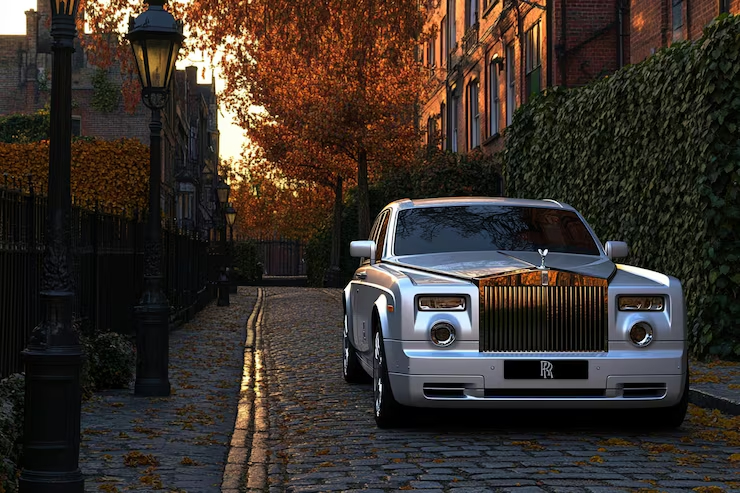
Rolls-Royce Motor Cars does not publish a detailed breakdown of sales by geography. This is not an accident. The granular data, if widely circulated, would complicate a brand narrative that has been carefully constructed around British heritage, European aristocracy, and the particular mythology of Goodwood.
What is publicly available — through industry analyst data, regional dealer disclosures, and the kind of trade press reporting that does not reach the brand’s primary marketing audience — tells a story that the marque’s communications team would prefer to contextualise carefully.
China is, by a significant margin, the largest single national market for Rolls-Royce vehicles. It has been for the better part of a decade. The Chinese buyer — predominantly self-made entrepreneurs, technology sector principals, and the new generation of privately created wealth that has emerged from China’s economic transformation — has not merely adopted Rolls-Royce. They have, in aggregate purchasing terms, defined its commercial success in the modern era.
What this means for the brand
The implications of this market reality are more nuanced than the reductive headline suggests. Rolls-Royce has not become Chinese in the sense that matters most to buyers — the manufacturing, the design philosophy, the engineering standards, and the craftsmanship at Goodwood remain unchanged by the geography of the customer base.
But the product decisions that any commercially serious manufacturer makes are influenced by the preferences of its largest market. The colour palettes that have expanded in the Bespoke programme. The interior specifications that have been developed as standing options. The exterior treatments that move from special commission to catalogue. These are not developed in a vacuum. They are developed in response to what the market — the actual, purchasing market — values.
The Chinese buyer’s aesthetic preferences — a relationship with colour, material, and surface treatment that is distinct from the European collector sensibility that historically defined Rolls-Royce’s visual language — are present in the modern vehicle range in ways that are not announced but that are visible to anyone tracking the evolution of the marque’s design direction.
The broader question this raises
Every ultra-luxury brand faces a version of this tension. The heritage that justifies the price point is rooted in a cultural context that the brand’s actual buyer base is increasingly remote from. The British shooting brake that inspired the original coachbuilders is not the cultural reference point of the Shenzhen entrepreneur commissioning a Phantom.
The brands that navigate this well — that honour the heritage authentically while evolving the product to serve a genuinely global clientele — create something that transcends the original cultural context and becomes a global object of desire in its own right.
The brands that do not navigate it well produce vehicles that are culturally confused — neither authentically rooted nor genuinely evolved.
Rolls-Royce, for all the complexity of its ownership history and its market geography, has largely navigated it well. The vehicles are extraordinary. The brand remains coherent.
But the buyer who thinks they are purchasing a British luxury vehicle is purchasing something more complicated and more interesting than that description captures.
China built the demand that sustains Goodwood. That is not a scandal. It is the honest history of the world’s most prestigious car in the modern era.
Curated by: Hype Luxury