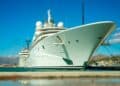

The purchase price of a superyacht is the number that appears in the press, the number that anchors the negotiation, and the number that most buyers treat as the primary financial variable in the acquisition decision.
It is not the most important number.
The most important number is the annual operating cost as a percentage of vessel value — a ratio that the superyacht industry has, for decades, expressed as a rule of thumb ranging from 10% to 15% of the purchase price annually for a well-maintained, properly crewed, actively used vessel.
For a $30 million superyacht, this means $3 million to $4.5 million per year. Every year. Regardless of how many weeks the vessel is used. Regardless of whether charter revenue partially offsets the cost. Regardless of market conditions, interest rates, or the principal’s personal financial circumstances in any given year.
This number — which is not a rule of thumb in the dismissive sense but a well-documented operational reality across the industry — is the number that determines whether a superyacht purchase makes sense for a specific principal at a specific point in their financial life.
Why the number is not asked for
The parties who benefit commercially from a superyacht transaction — the broker, the shipyard, the management company, the crew agency, the insurance broker, the marina — all benefit from the transaction occurring. None of them benefit from the transaction not occurring. The principal who decides, on the basis of a thorough understanding of operating costs, that superyacht ownership is not the right decision at this point is not a client that any of these parties have a financial interest in creating.
The operating cost conversation is not hidden. The information is available. It is simply not presented prominently in the sales process, and the principals who do not ask for it specifically are not always offered it voluntarily.
What the number actually includes
Crew. A 40-metre vessel requires a minimum crew of eight to ten people. Fully loaded crew cost — salaries, accommodation, repatriation, training, insurance, and the incidentals that accumulate in a live-aboard professional context — is the single largest operating cost line for most vessels.
Maintenance and refit. The marine environment is among the most corrosive operating conditions for any mechanical and structural system. A vessel maintained at the standard required for charter certification and principal expectation requires a rolling programme of maintenance expenditure that scales with vessel age and complexity.
Insurance. Hull and machinery, P&I, crew liability, and loss of charter income coverage for a 40-metre vessel represents a significant annual premium that most buyers underestimate at acquisition.
Berth fees. Prime Mediterranean marina berths — the locations where a vessel of this size can reasonably be expected to spend its season — carry annual costs that are, in several cases, equivalent to a significant property rental.
Fuel. A 40-metre motor yacht at cruising speed consumes quantities of diesel that would surprise anyone who has not operated a vessel at this scale.
The principal who does the arithmetic
The principal who models the full operating cost before signing the purchase agreement — who looks at the five-year total cost of ownership including depreciation, who maps the realistic usage pattern against the carrying cost, who considers the charter revenue realistically rather than optimistically — makes a different decision than the principal who does not.
Sometimes the decision is the same: to purchase. But it is made on the basis of an honest understanding of what is being committed to.
That understanding is worth considerably more than the price negotiation that most buyers spend their energy on.
Curated by: Hype Luxury