

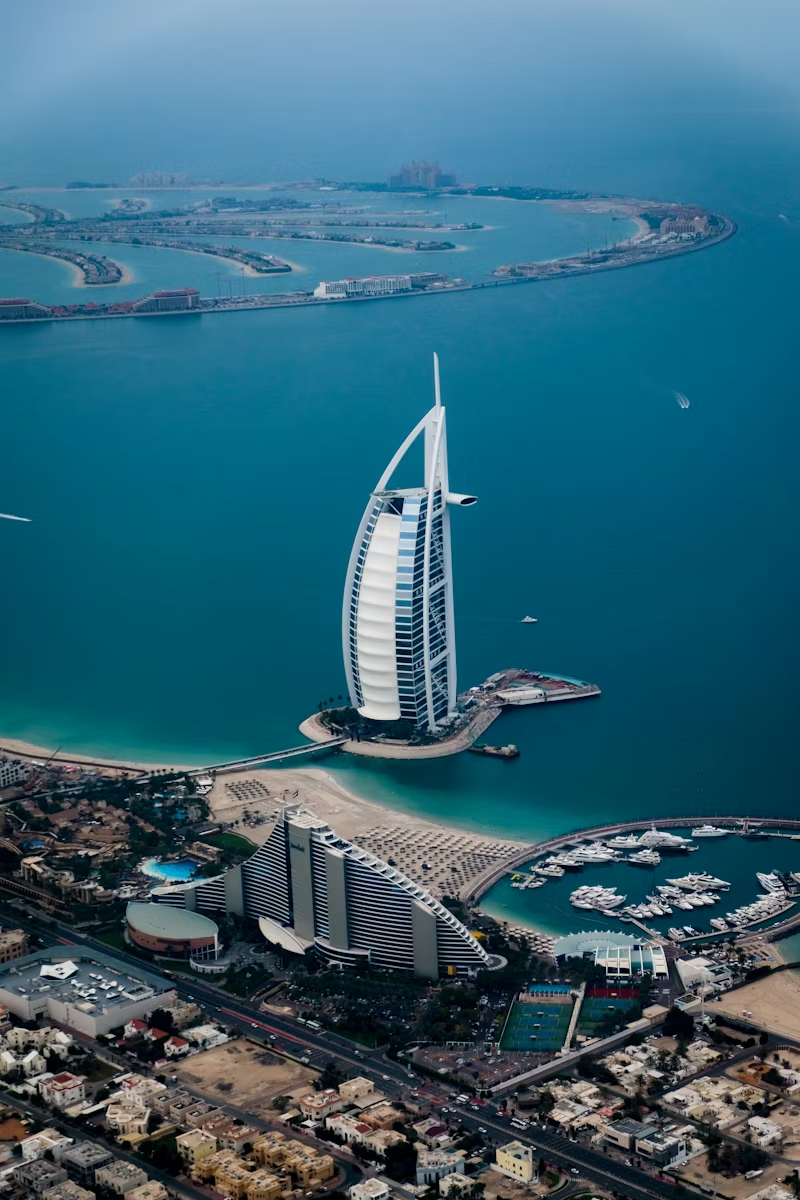
The India–Dubai corridor carries more private aviation movements per year than almost any comparable city-pair outside North America. This is not hyperbole — it is a reflection of the bilateral economic relationship between the two markets, the density of UHNW principals with active interests in both, and the absence of a meaningful direct alternative to air travel for anything time-sensitive.
It is also, by some margin, the route most likely to punish under-prepared operators.
The Regulatory Environment
Indian aviation regulation is among the most complex in Asia for private and charter operations. Permits, slot management, and the coordination between DGCA protocols and UAE authorities require specific expertise — not general aviation competence. Operators without Indian market depth consistently underestimate the lead time and documentation burden, and consistently produce delays that erode the fundamental value proposition of the flight.
Peak Volume and Slot Pressure
During Diwali, the IPL auction season, and around the Global Millionaires’ Fair calendar, Indian private aviation demand compresses into windows that expose every operational weakness simultaneously. Principals travelling during these periods without pre-secured slots and pre-positioned aircraft are operating on hope. The operators managing smoothly through peak periods have built redundancy into their systems months earlier.
The Ground Dimension
Dubai’s ground luxury infrastructure is mature and largely excellent. India’s is improving rapidly but remains uneven across cities. The Mumbai–Dubai principal movement typically involves a different ground experience at each end — which requires different operator relationships, not a single vendor applied to both.
What Consistent Performance Requires
Consistent performance on the India–Dubai corridor requires operator relationships in both markets, permit expertise specific to Indian DGCA protocols, slot management built weeks ahead of the movement, and a ground network that does not end at the tarmac. At Hype Luxury, this corridor is among the most familiar in our operational footprint. The familiarity is not incidental — it was built deliberately, because our clients require it.