

The 18th-century Grand Tour — that ritual journey through Europe undertaken by aristocratic young men in search of culture, polish, and something approximating wisdom — has a modern successor. It is less codified, considerably more expensive, and it spans the globe rather than the continent. But its underlying logic is the same: at a certain level of privilege and curiosity, travel becomes not leisure but education. Not escape but engagement.
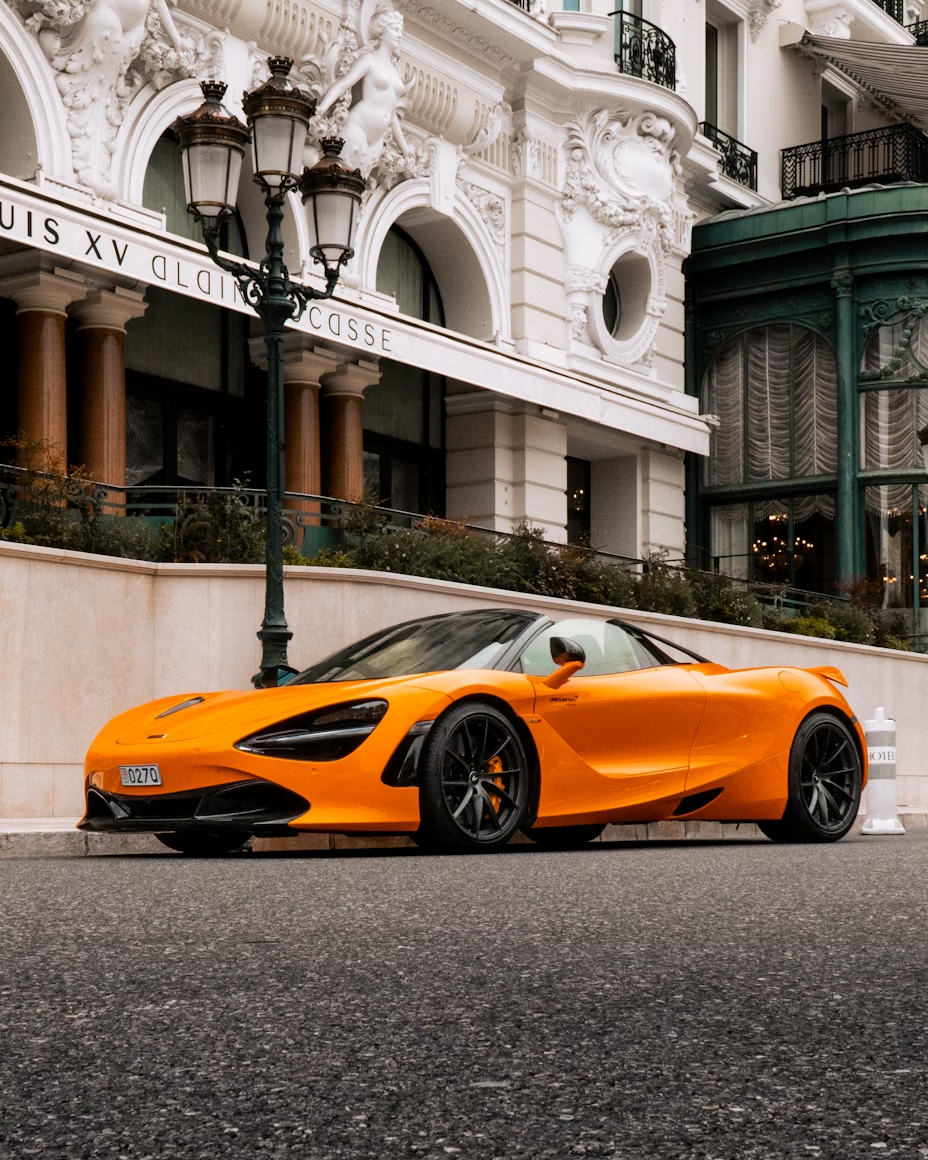
The UHNW traveller of 2025 has already seen the obvious. They have done the Maldives overwater villa. They have been to Monaco for the Grand Prix and to St. Barts for the new year. These destinations have not lost their appeal, but they have lost their novelty — and novelty, for the person who has experienced nearly everything, is among the rarest and most valuable currencies.
The turn toward experience density
What the most sophisticated UHNW travellers now seek is what might be called experience density — the concentration of genuinely rare, unrepeatable moments within a single journey. This is why Bhutan, with its government-managed visitor limits and its landscape of monasteries that require a four-hour trek to reach, has become quietly coveted. It is why Antarctica draws billionaires aboard expedition vessels that cost more than most people’s homes. It is why a private dinner in the cook’s kitchen of a three-Michelin-star restaurant in Kyoto — not the dining room, the kitchen — is worth considerably more than the table itself.
The India-Dubai-Monaco-London corridor
Among the most active UHNW travel corridors in the world right now is the arc connecting India’s emerging ultra-wealthy class with their established counterparts in Dubai, Monaco, and London. This corridor is not merely geographic — it is relational. It maps the business interests, family connections, and seasonal rhythms of a class of wealth that is increasingly globally mobile and locally influential.
A Mumbai-based principal might summer in Monaco, maintain a pied-à-terre in Mayfair, keep a principal residence in Dubai for its tax efficiency and its proximity to the subcontinent, and spend two weeks each year somewhere genuinely off the map — Patagonia, the Norwegian fjords, a private island in Palawan that requires a charter flight and a seaplane to reach. The logistics of this life are not simple. They require someone who knows every leg of the journey intimately.
The role of the single trusted contact
What makes extraordinary travel possible at this level is not money — it is access. And access, in the UHNW travel world, is almost entirely relationship-driven. The right suite at the right hotel in Monaco during Grand Prix week is not bookable through any website. The private charter to a remote airstrip in Bhutan requires an operator with the right permits and the right aircraft. The expedition vessel berth in Antarctica sells through a list that closes eighteen months in advance.
Hype Luxury was built to navigate exactly this landscape — the intersection of extraordinary ambition and genuine logistical complexity, resolved through relationships that take years to build and cannot be replicated at speed.