

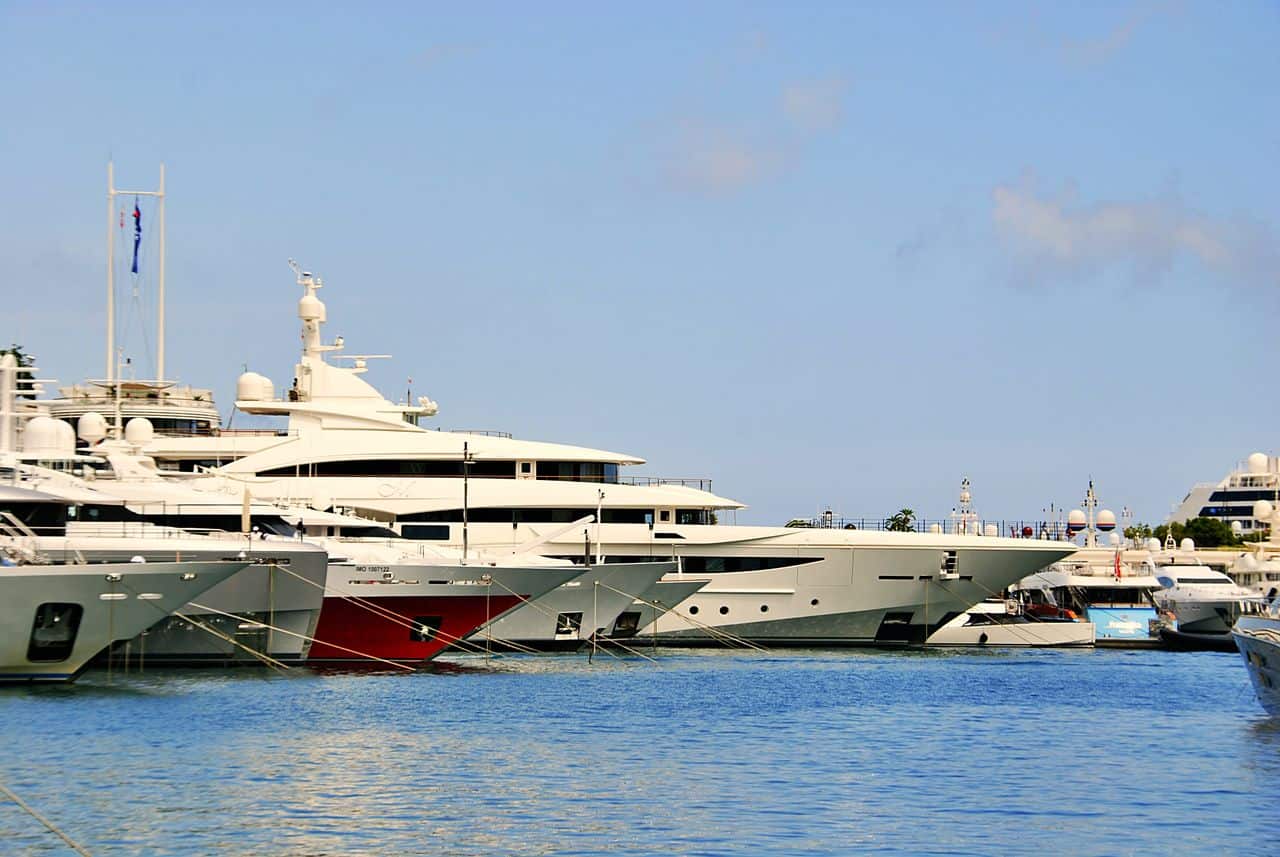
The most consistently underestimated figure in the superyacht market is not the purchase price. It is the cost of the second year. Research across the industry repeatedly shows first-time buyers underestimate annual operating budgets by 30 to 50 percent. Within 18 to 24 months of delivery a meaningful proportion find themselves in financial strain, not because the vessel was unaffordable, but because the true annual cost of superyacht ownership was never presented to them clearly.
The 10 percent rule is wrong and experienced brokers know it. The long-standing industry rule of thumb that annual running costs equal 10 percent of purchase price is outdated. Based on 2026 data from Burgess, Fraser, MYBA benchmarks, and the YPI Crew Salary Guide, the accurate planning figure for a privately operated motor yacht between 40 and 60 metres is 12 to 15 percent of purchase price annually. For older vessels or those operated commercially it is 15 to 20 percent. On a $30 million vessel the difference between 10 percent and 14 percent is $1.2 million per year. That is not a rounding error.
Crew is the single largest cost category and the one most consistently overlooked. It accounts for 30 to 40 percent of total annual operating cost at every vessel size. According to the YPI Crew 2026 Salary Guide a captain on a 50-metre vessel earns €120,000 to €192,000 in base salary annually. On an 80-metre vessel the same captain earns €192,000 to €276,000. A chief officer and chief engineer each add €70,000 to €100,000. For a fully crewed 40-metre yacht with 8 to 10 crew total crew cost including salaries, benefits, training, travel, and provisioning runs $500,000 to $700,000 annually. For a 60-metre vessel with 14 to 18 crew the figure is $1.2 million to $1.8 million per year.
Maintenance accounts for 14 to 18 percent of annual operating cost. For a $20 million vessel this is $250,000 to $400,000 in a normal year. Refit cycles occurring every five years will spike to $2 million to $5 million for a 50-metre vessel depending on scope. Deferred maintenance always costs more and every captain knows it.
Insurance from specialist underwriters like Pantaenius runs 0.8 to 1.5 percent of insured value per year. For a $20 million vessel that is $160,000 to $300,000 annually. For a $50 million vessel it is $400,000 to $750,000.
Berthing costs vary dramatically by territory. Monaco charges €2,000 to €5,000 per night for a 50-metre vessel in standard peak season and €15,000 to €20,000 per night during Grand Prix week. Portofino peak season runs €5,000 to €12,000 per night. The Greek islands by contrast cost €200 to €500 per night at designated anchorages. Itinerary selection is a genuine financial decision. For a 50-metre vessel on a Mediterranean summer and Caribbean winter circuit combined annual berthing costs of $300,000 to $600,000 are realistic.
Fuel for a 50-metre motor yacht at 12 knots runs $2,800 to $4,480 per day of active cruising at 2026 Mediterranean dock prices. An active summer season of 800 cruising hours costs $400,000 to $640,000 in fuel alone for this vessel size.
Total annual running cost by vessel size: a 30-metre vessel runs $710,000 to $1.25 million. A 40-metre vessel runs $1.1 million to $1.95 million. A 50-metre vessel runs $1.8 million to $3.15 million. A 60-metre vessel runs $2.75 million to $4.75 million. An 80-metre-plus vessel runs $4.5 million to $7.6 million and above.
The single most important number every buyer should establish before any broker conversation is their annual operating budget comfort level, not their purchase price comfort level. The purchase price is a one-time decision. The operating budget is a commitment made every year for as long as you own the vessel.