

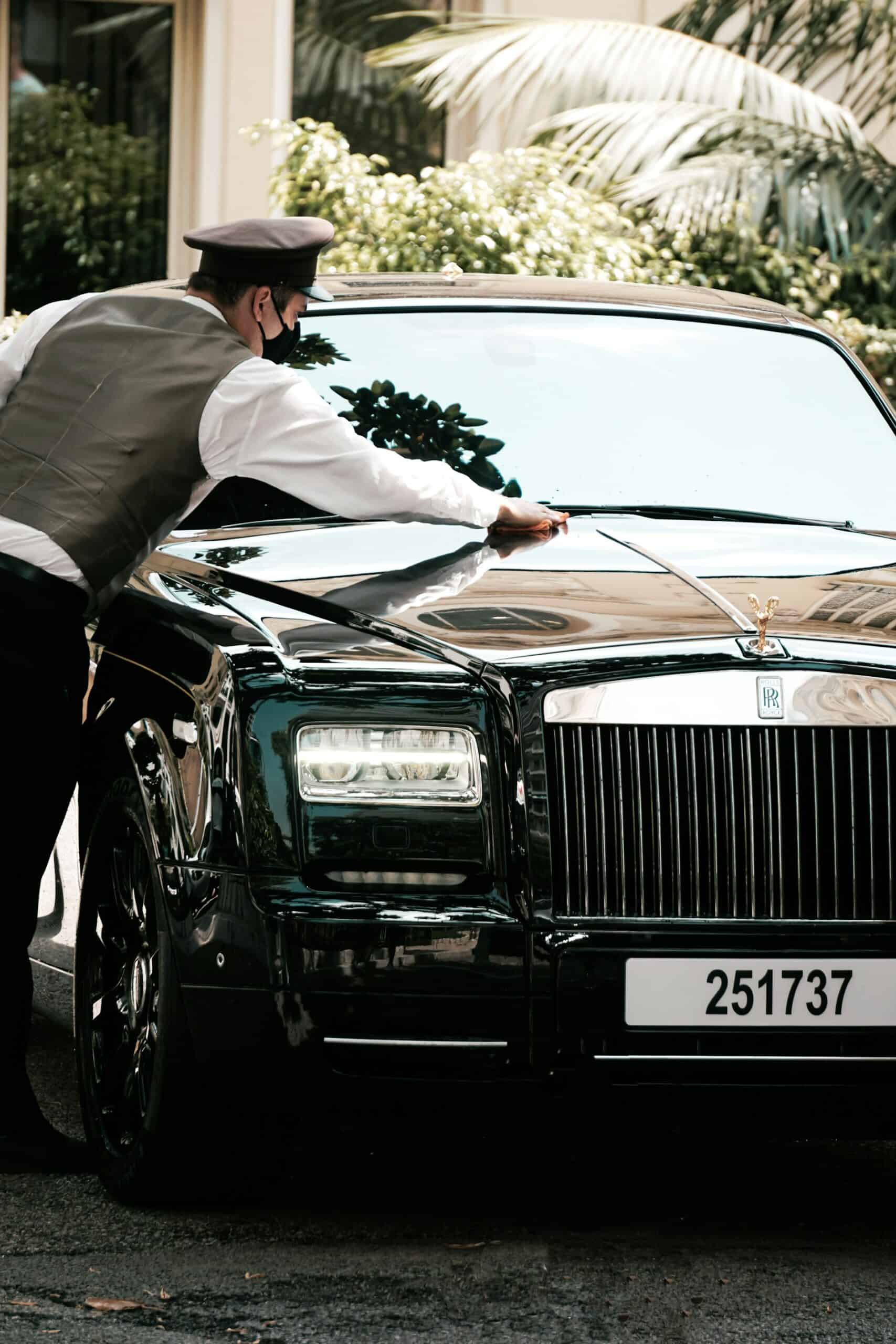
Two of the largest ride-hailing companies in the world have, within months of each other, made significant moves into premium chauffeur travel — one through a major acquisition of an established global chauffeur network, the other through both an acquisition and an invite-only luxury product launch of its own. For UHNW clients and the family offices who arrange their travel, this raises a fair question: does this make the top end of luxury ground transport better, worse, or simply different?
The honest answer is: better in some dimensions, and structurally unchanged in the dimension that matters most for this client base. On operational quality, these platforms bring genuine advantages — global scale means broader city coverage, sophisticated matching technology means more reliable availability, and deep capital reserves mean sustained investment in vehicle standards and driver vetting infrastructure that smaller independent operators may struggle to match consistently across every market. A client landing at an unfamiliar international airport is likely to find these platforms more consistently reliable than they might have been a decade ago.
Where the calculus does not change is discretion, and it is worth being specific about why. A platform built to serve, at scale, both an everyday rider requesting a standard trip and a UHNW client requesting a sensitive one is, by its nature, optimized for the common case. Data handling, driver briefing protocols, and internal access controls are built for consistency across a massive user base — which is a reasonable and even admirable design choice for a mass-market platform, but it is not the same design choice a family would make if they were building a service exclusively for principals whose location, companions, and purpose need to remain genuinely unknown to anyone outside a tightly controlled circle. Scale and absolute discretion pull in different directions, and no amount of capital fully resolves that tension — it can only be managed through explicit account-level controls the client has to know to ask for.
This is precisely why platform consolidation in this space should be read as a validation of the broader category, not a threat to the specific value a discretion-first partner provides. The mainstream platforms are proving that premium ground mobility, aggregated intelligently, is a real and growing business. What they are not positioned to do — because it is not the product they are built to sell to their primary customer base — is treat a single UHNW family’s privacy requirements as the starting design premise rather than an add-on feature layered onto a mass-market architecture.
For families and family offices evaluating providers in this new landscape, the useful question is not which platform has the largest fleet or the most polished app. It is which partner is actually accountable, specifically and personally, for the fact that a given trip’s existence never becomes visible to anyone the client didn’t choose to tell. That accountability does not scale the way a ride-hailing network does — and that is exactly why it remains the thing worth paying for.