

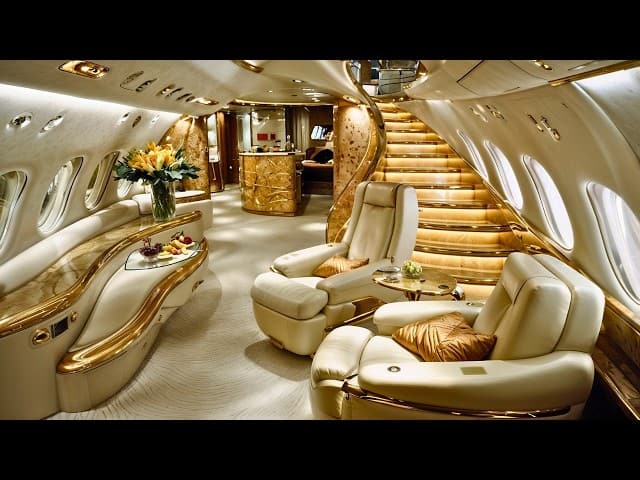
Private aircraft customization has entered a domain that transcends traditional luxury positioning. Ultra-premium aircraft now command valuations exceeding $500 million when fully personalized—not through acquisition of aircraft in higher price brackets, but through intensive interior customization and bespoke engineering that transforms basic airframes into operational flying mansions.
The distinction is critical. The conversation used to center on aircraft platforms: a Gulfstream G650 costs $75 million, a Boeing Business Jet (BBJ) costs $150-200 million. These figures are acquisition costs for the platform. Customization represents layered cost above the baseline.
Billionaire aircraft customization has evolved into a separate industry. Specialized firms—working with aircraft manufacturers, interior design studios, and engineering shops—conduct 12-24 month bespoke configuration programs that transform generic cabins into integrated residential and operational spaces.
Consider the scope: a principal’s flying palace might incorporate a full shower suite with marble detailing, a master bedroom with integrated workspace, a separate guest suite with ensuite facilities, a boardroom configured for video conferencing and live trading, a full galley with refrigeration matching residential kitchen capability, a spa area with massage chair, and entertainment systems rivaling luxury resorts.
This requires more than interior decoration. It requires systems integration: water pressure management for showers at altitude, waste management infrastructure, power generation sufficient for simultaneous high-load operations, HVAC systems maintaining residential comfort across altitude variations, and networking systems supporting secure communications, trading terminals, and video conferencing.
The engineering complexity is significant. Aircraft stability calculations must account for custom weight distributions. Electrical systems must support integrated charging and power delivery across dozens of simultaneous systems. Regulatory compliance requires FAA certification for all custom modifications. A single shower installation can require six months of engineering, testing, and certification.
Manufacturers have capitalized by establishing dedicated ultra-high-net-worth customization divisions. Boeing Business Jet and Airbus Corporate Jetliner now operate separate divisions focused exclusively on principals with $150 million+ budgets. These divisions treat customization as primary value-creation vector.
The economics are revealing. For a principal with sufficient wealth, the custom-aircraft economics pencil favorably. A principal acquiring a $200 million BBJ base airframe might invest additional $150-300 million in customization, resulting in a fully personalized platform valued at $350-500 million. The marginal cost per square foot of cabin space can exceed luxury real estate pricing.
This is economically rational for the relevant demographic. For a principal conducting global operations and managing family offices across continents, a personalized flying headquarters offers integrated productivity that traditional aircraft cannot match. The aircraft is not luxury consumption. It is operational infrastructure.
The visibility of these platforms also signals wealth and operational scale. A custom aircraft represents commitment to intensive operations and principal-level resource deployment. It functions as both productivity tool and visible asset confirming ultra-wealth status.
From a market perspective, this has created interesting secondary-market dynamics. Customized aircraft have limited resale appeal—the customization reflects personal preferences rather than generic utility. A principal’s meticulously engineered master suite may be operationally irrelevant to the next owner. This creates market illiquidity for ultra-premium custom aircraft.
However, for principals planning multi-decade operations, this illiquidity is acceptable. The aircraft is infrastructure owned until functionality changes or wealth reallocation necessitates disposition.
The technology trajectory suggests further customization escalation. AI-integrated cabin systems, autonomous servicing infrastructure, and advanced environmental controls will enable increasingly sophisticated flying-residence configurations.