

Rent Luxury Cars, Jets and Yacht
Hype Luxury Blog
No Result
View All Result
  • Blog
  • News & Press
  • Videos
  • Write For Us
  • Login
  • Blog
  • News & Press
  • Videos
  • Write For Us
  • Login
Hype Luxury Blog
No Result
View All Result
Hype Luxury Blog
No Result
View All Result

Rare Wine and Spirits Collecting for UHNW Principals: What Serious Collectors Actually Do

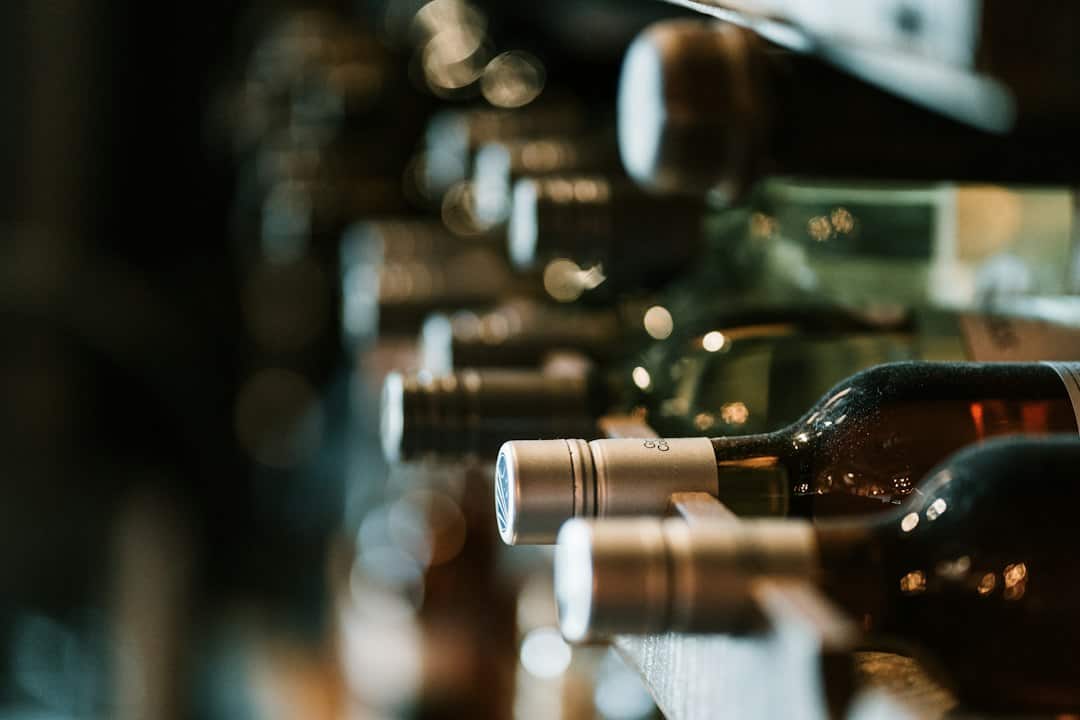
Luxury wine cellar vintage bottles collection — Hype Luxury
Previous Post

High Jewelry as a UHNW Investment: Why Stones Are Now in the Portfolio Conversation

Next Post

Commissioning a Michelin-Starred Chef: How UHNW Principals Access Private Culinary Excellence

Why Wine and Spirits Attract Serious Capital

The appeal of fine wine and rare spirits as an asset class is structural: supply is finite and diminishing, demand from Asia and the Middle East has materially widened the buyer base, and the category has a documented history of preserving real value across economic cycles. The Liv-ex Fine Wine 1000 index has, over the past two decades, delivered returns that compare favourably with many traditional asset classes — with lower volatility than equities in several periods.

The important caveat is that this performance is not distributed evenly. It is concentrated in a narrow band of appellations and producers — and within those, in specific vintages and formats.

Where the Returns Actually Come From

Burgundy — specifically Domaine de la Romanée-Conti and the handful of premier cru producers from Gevrey-Chambertin, Chambolle-Musigny, and Vosne-Romanée — has generated the most consistent appreciation. A case of DRC La Tâche 2005 purchased en primeur and cellared correctly has appreciated in ways that most financial assets cannot match.

Bordeaux first growths remain liquid but have moderated from their peak China-driven valuations. The opportunity now sits in right-bank appellations — Pomerol and Saint-Émilion — where supply is smallest and the collector base most concentrated.

Whisky has emerged as the second major category. Single-cask bottlings from Macallan, Port Ellen, and Brora — distilleries either closed or with severely constrained production — have generated auction results that attract serious financial attention. The 2019 sale of a single bottle of Macallan 1926 for $1.9 million established the category as more than a hobby.

The Storage and Provenance Question

Neither financial returns nor enjoyment is possible without institutional-grade storage. Wine purchased and held in a domestic cellar — however well-managed — commands a discount at auction relative to bonded warehouse provenance. The London Market and Le Havre remain the gold standards, with Geneva and Hong Kong as viable alternatives for Asian liquidity events.

For spirits, original case condition matters as much as the liquid. A complete original case with paperwork intact commands premiums of 20–40% over equivalent bottles in repacked or damaged cases. Serious collectors document everything from acquisition through transfer, treating each bottle as a chain-of-custody asset.

The En Primeur Question

Purchasing Bordeaux en primeur — before bottling, directly from negociants — used to be the primary route to acquiring top Bordeaux at advantageous prices. The model has become more complex: quality has been more consistent, pricing has become more efficient, and the advantage that en primeur once offered has narrowed. Selective participation, focused on exceptional vintages at first-growth and garage wine level, remains worthwhile for those with the storage infrastructure and multi-year horizon.

How Principals Are Structuring Their Holdings

The most sophisticated approach is a two-tier structure: a core holding of investment-grade wine in professional storage, managed with the intention of realisation at optimal auction timing, alongside a consumption cellar maintained separately. The two must not cross — drinking investment stock is a structural error that principals make more often than advisors would prefer.

Hype Luxury provides bespoke travel and concierge services for UHNW principals. Enquire at hype.luxury.


Tags: LuxuryPrivateJetCharterUHNWTravelConcierge
Fine dining luxury restaurant gourmet — Hype Luxury

Commissioning a Michelin-Starred Chef: How UHNW Principals Access Private Culinary Excellence

October 9, 2026
Luxury wine cellar vintage bottles collection — Hype Luxury

Rare Wine and Spirits Collecting for UHNW Principals: What Serious Collectors Actually Do

October 9, 2026
High jewelry diamond luxury exhibition — Hype Luxury

High Jewelry as a UHNW Investment: Why Stones Are Now in the Portfolio Conversation

October 9, 2026
Luxury fashion bespoke tailoring couture — Hype Luxury

Luxury Fashion Styling for UHNW Executives: Beyond the Personal Shopper

October 9, 2026
Luxury hotel suite five star hospitality — Hype Luxury

How to Access Invitation-Only Luxury Events: The Architecture Behind Exclusive Access

October 9, 2026
Luxury wine cellar vintage bottles collection — Hype Luxury
Previous Post

High Jewelry as a UHNW Investment: Why Stones Are Now in the Portfolio Conversation

Next Post

Commissioning a Michelin-Starred Chef: How UHNW Principals Access Private Culinary Excellence

Why Wine and Spirits Attract Serious Capital

The appeal of fine wine and rare spirits as an asset class is structural: supply is finite and diminishing, demand from Asia and the Middle East has materially widened the buyer base, and the category has a documented history of preserving real value across economic cycles. The Liv-ex Fine Wine 1000 index has, over the past two decades, delivered returns that compare favourably with many traditional asset classes — with lower volatility than equities in several periods.

The important caveat is that this performance is not distributed evenly. It is concentrated in a narrow band of appellations and producers — and within those, in specific vintages and formats.

Where the Returns Actually Come From

Burgundy — specifically Domaine de la Romanée-Conti and the handful of premier cru producers from Gevrey-Chambertin, Chambolle-Musigny, and Vosne-Romanée — has generated the most consistent appreciation. A case of DRC La Tâche 2005 purchased en primeur and cellared correctly has appreciated in ways that most financial assets cannot match.

Bordeaux first growths remain liquid but have moderated from their peak China-driven valuations. The opportunity now sits in right-bank appellations — Pomerol and Saint-Émilion — where supply is smallest and the collector base most concentrated.

Whisky has emerged as the second major category. Single-cask bottlings from Macallan, Port Ellen, and Brora — distilleries either closed or with severely constrained production — have generated auction results that attract serious financial attention. The 2019 sale of a single bottle of Macallan 1926 for $1.9 million established the category as more than a hobby.

The Storage and Provenance Question

Neither financial returns nor enjoyment is possible without institutional-grade storage. Wine purchased and held in a domestic cellar — however well-managed — commands a discount at auction relative to bonded warehouse provenance. The London Market and Le Havre remain the gold standards, with Geneva and Hong Kong as viable alternatives for Asian liquidity events.

For spirits, original case condition matters as much as the liquid. A complete original case with paperwork intact commands premiums of 20–40% over equivalent bottles in repacked or damaged cases. Serious collectors document everything from acquisition through transfer, treating each bottle as a chain-of-custody asset.

The En Primeur Question

Purchasing Bordeaux en primeur — before bottling, directly from negociants — used to be the primary route to acquiring top Bordeaux at advantageous prices. The model has become more complex: quality has been more consistent, pricing has become more efficient, and the advantage that en primeur once offered has narrowed. Selective participation, focused on exceptional vintages at first-growth and garage wine level, remains worthwhile for those with the storage infrastructure and multi-year horizon.

How Principals Are Structuring Their Holdings

The most sophisticated approach is a two-tier structure: a core holding of investment-grade wine in professional storage, managed with the intention of realisation at optimal auction timing, alongside a consumption cellar maintained separately. The two must not cross — drinking investment stock is a structural error that principals make more often than advisors would prefer.

Hype Luxury provides bespoke travel and concierge services for UHNW principals. Enquire at hype.luxury.
Tags: LuxuryPrivateJetCharterUHNWTravelConcierge
Fine dining luxury restaurant gourmet — Hype Luxury

Commissioning a Michelin-Starred Chef: How UHNW Principals Access Private Culinary Excellence

October 9, 2026
Luxury wine cellar vintage bottles collection — Hype Luxury

Rare Wine and Spirits Collecting for UHNW Principals: What Serious Collectors Actually Do

October 9, 2026
High jewelry diamond luxury exhibition — Hype Luxury

High Jewelry as a UHNW Investment: Why Stones Are Now in the Portfolio Conversation

October 9, 2026
Luxury fashion bespoke tailoring couture — Hype Luxury

Luxury Fashion Styling for UHNW Executives: Beyond the Personal Shopper

October 9, 2026
Luxury hotel suite five star hospitality — Hype Luxury

How to Access Invitation-Only Luxury Events: The Architecture Behind Exclusive Access

October 9, 2026


Hype Luxury Logo


Sign up to our newsletter to stay updated

johnsmith@example.com

Company

  • About
  • News & Press
  • Blog
  • T & C
  • Privacy

Contact

  • Contact
  • Partnership
  • Help

Social

  • Instagram
  • Youtube
  • LinkedIn
  • Facebook
  • Twitter
No Result
View All Result
  • Home
  • News & Press
  • Videos
  • Write For Us
  • Login
  • RENT LUXURY CARS
  • Login
  • Sign Up