
There was a time when ownership represented the ultimate symbol of wealth.
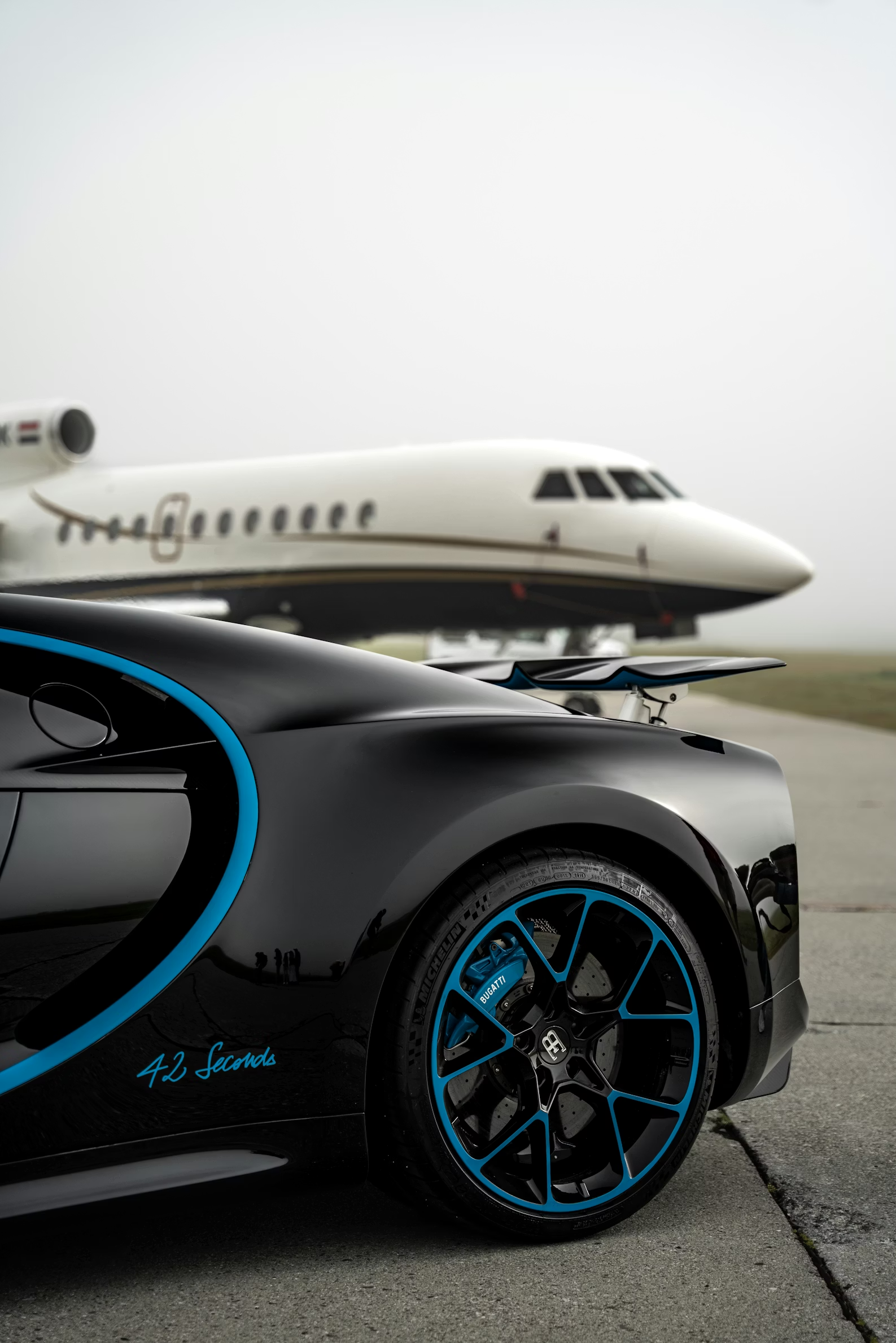
Private jets. Mega yachts. Rare supercars. Luxury estates across multiple continents.
The psychology of wealth historically revolved around possession.
Owning the biggest, rarest, or most exclusive asset was considered the clearest expression of status.
But something fascinating has happened over the last decade.
Many of the world’s wealthiest individuals are slowly moving away from ownership obsession and toward something far more intelligent.
Access.
This shift is reshaping industries across luxury mobility, hospitality, fashion, aviation, and lifestyle services.
Modern UHNW individuals increasingly prioritize:
- flexibility,
- efficiency,
- operational simplicity,
- geographic freedom,
- and experience optimization.
Ownership, while prestigious, often creates friction.
A private jet is not simply a glamorous asset.
It is a complex operational ecosystem involving:
- maintenance,
- staffing,
- hangar management,
- insurance,
- compliance,
- fuel economics,
- utilization inefficiencies,
- and regulatory oversight.
The same applies to mega yachts.
Behind every beautiful yacht photograph exists an enormous operational machine.
Crew salaries. Docking. Refits. Seasonal repositioning. Maintenance cycles. Technical downtime.
Sophisticated wealth increasingly understands this distinction.
Luxury is no longer about owning everything.
Luxury is about eliminating unnecessary complexity.
This is why access-based luxury models are becoming significantly more powerful.
The modern billionaire wants the right jet for the right route.
Not necessarily the same aircraft every time.
A founder flying from Mumbai to Dubai may require a completely different aircraft than a family traveling from London to Nice.
Similarly, a Mediterranean yacht charter differs emotionally and operationally from a Southeast Asian yachting experience.
The future of luxury lies in intelligent customization.
Not rigid ownership.
This transformation mirrors what happened in technology.
The world moved from owning servers to cloud infrastructure.
Luxury mobility is now experiencing a similar transition.
Instead of accumulating assets, wealthy individuals increasingly prefer accessing global ecosystems seamlessly.
This creates enormous opportunity for brands like Hype Luxury.
Because the future winners in luxury mobility may not necessarily be the companies owning the most vehicles.
They may be the companies best positioned to orchestrate global access.
That distinction matters deeply.
The modern luxury customer values:
- availability,
- response time,
- discretion,
- reliability,
- and operational intelligence.
Not merely ownership.
This is especially true among globally mobile entrepreneurs.
Today’s UHNW founders often live transnational lifestyles.
Their lives operate across:
- Dubai,
- London,
- Monaco,
- Singapore,
- New York,
- Riyadh,
- Mumbai,
- and Saint-Tropez.
Their expectations are fundamentally different from traditional wealth.
They do not want static luxury.
They want fluidity.
This evolution explains why luxury concierge ecosystems, private aviation networks, and access-driven platforms are growing rapidly.
Because modern luxury is increasingly becoming about reducing cognitive burden.
True luxury feels effortless.
A sophisticated client should never feel operational friction.
They should not worry about:
- aircraft sourcing,
- transfer coordination,
- crew standards,
- route permissions,
- or movement logistics.
They expect everything to function invisibly.
That is the new definition of premium.
At Hype Luxury, this philosophy is becoming central to the company’s broader vision.
The future is not about renting vehicles.
It is about becoming a global mobility intelligence layer for ultra-high-net-worth individuals.
The objective is not merely access to luxury assets.
The objective is orchestration.
This orchestration mindset is where the luxury industry is heading.
In the next decade, luxury brands will increasingly separate into two categories.
The first category will continue selling products.
The second category will sell peace of mind.
The second category will dominate.
Because the wealthiest individuals in the world no longer value accumulation the same way previous generations did.
They value freedom.
Freedom from complexity. Freedom from operational burden. Freedom from unnecessary ownership. Freedom from inefficiency.
Access has become more emotionally powerful than possession.
And this shift may define the next era of global luxury.