

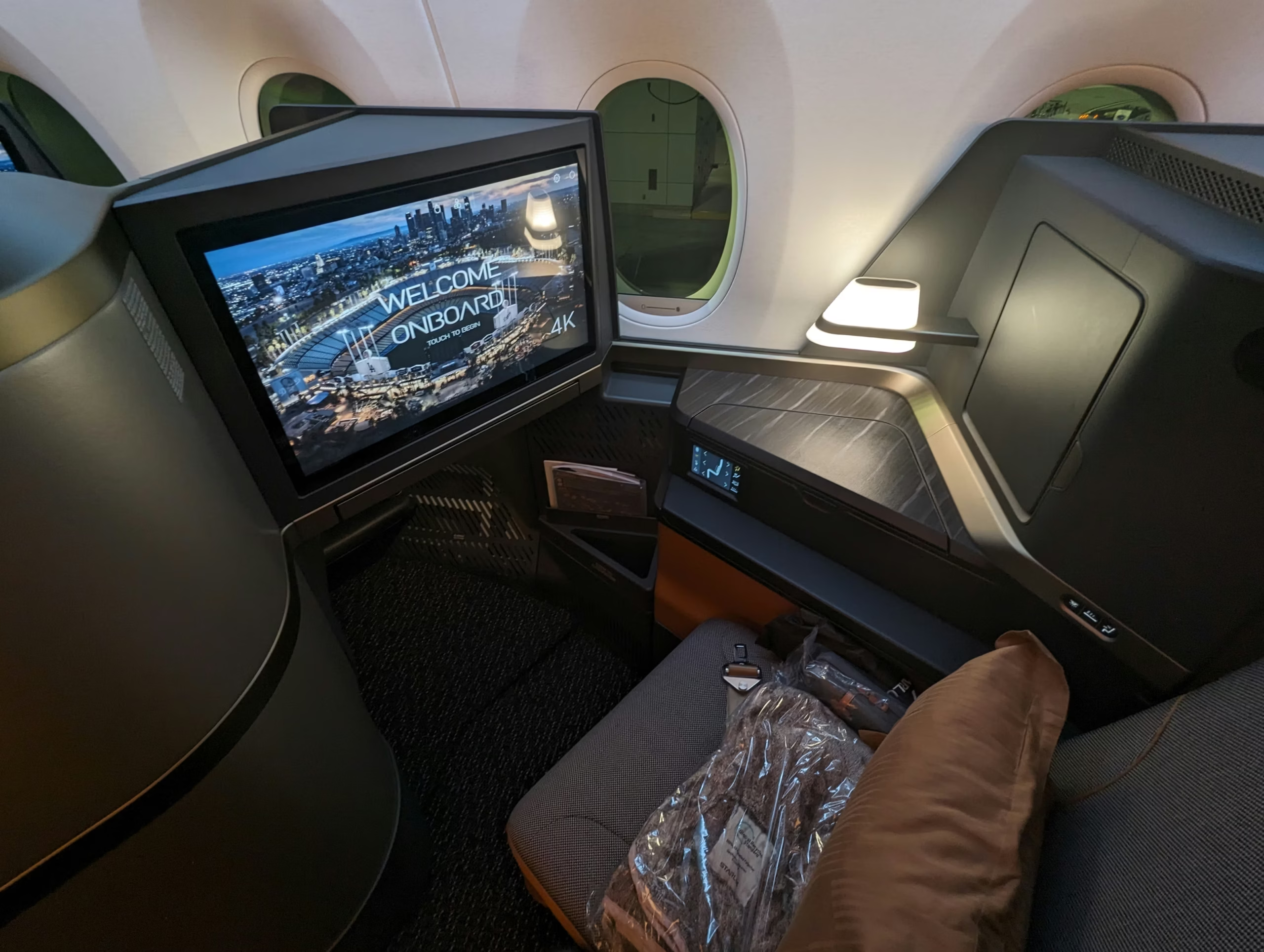
Most people compare private jets to first class incorrectly.
They compare seats.
The real difference has nothing to do with seats.
The difference is emotional architecture.
Commercial first class is still built around mass movement.
Private aviation is built around personal control.
That distinction changes the entire psychological experience of travel.
Even the world’s best first-class cabin still involves:
- crowded terminals,
- fixed schedules,
- public visibility,
- unpredictable delays,
- and shared environments.
Private aviation removes all of that.
And what replaces it is psychologically powerful:
Calm.
No waiting.
No boarding chaos.
No public exposure.
No rushed movement.
For many UHNW individuals, this emotional shift becomes addictive.
Because they are not merely escaping discomfort.
They are escaping cognitive friction.
This is why private aviation demand remains extraordinarily strong even after pandemic-era surges stabilized.
The emotional value extends far beyond luxury aesthetics.
Private aviation creates:
- continuity,
- silence,
- privacy,
- and control over tempo.
Tempo matters enormously to high-performance individuals.
The modern billionaire often lives inside constant interruption:
- meetings,
- notifications,
- media exposure,
- investor pressure,
- global movement.
Private aviation creates protected psychological space.
And protected space became incredibly valuable in the modern world.
That may ultimately be the real luxury private aviation sells.
Not leather seats.
Not champagne.
Control over mental atmosphere.