

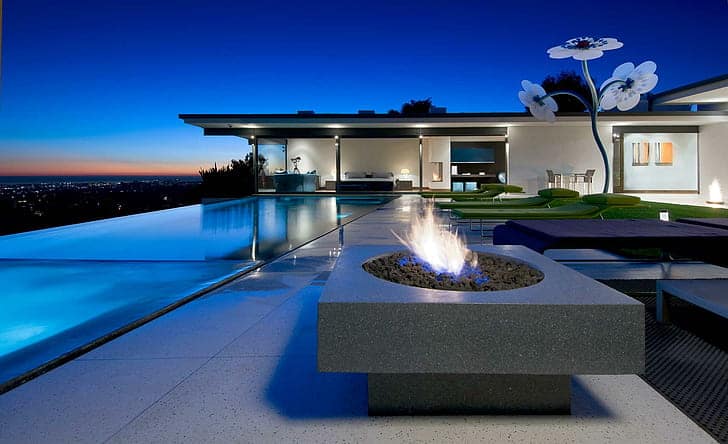
The butler is available at all hours. The restaurant has two Michelin stars. The pool is heated to the degree. The thread count on the linen is a number that, when cited, is intended to convey both quality and the effort involved in its specification.
And across the private villa market, for the same budget or less, you are not sharing any of it with anyone.
The luxury hotel had a century of dominance. It is losing ground. And the reasons are structural, not temporary.
What the Hotel Sells
The five-star hotel sells a curated version of its own identity.
The design is the hotel’s design. The restaurant is the hotel’s concept. The spa menu is standardised across the brand’s properties from Abu Dhabi to Zürich. The experience is exceptional, polished, and fundamentally not yours.
For a client whose life at home is arranged entirely around their preferences — the kitchen that functions their way, the library organised by their logic, the schedule that moves at their rhythm — the hotel is a step down in personalisation, despite being a step up in service.
What the Villa Provides
A private villa provides the experience the hotel cannot: a private world that functions on the occupant’s terms.
The pool is used when you want to use it. Dinner is served when you choose to eat. The guests at breakfast are the guests you invited. The staff are briefed on your preferences before you arrive and are not simultaneously managing forty other guests with different requirements.
The privacy is not a room with a Do Not Disturb sign. It is a property with a gate.
The Service Comparison
This is where the hotel has traditionally defended its position: service.
A five-star hotel has the infrastructure to provide service at a level that a private villa cannot routinely match. The concierge. The 24-hour room service. The medical team on call. The capability to absorb and resolve problems at any hour.
This argument was more compelling before the villa management industry professionalised.
The managed villa sector now provides staffing — private chefs, housekeeping, concierge, security — at a level that renders the hotel’s service advantage narrower than it once was. The Amalfi villa with a private chef sourced through the right operator delivers a dining experience that the hotel restaurant cannot, because it is designed entirely around you.
The Privacy Arithmetic
For a family travelling with children, with elderly relatives, with business guests, or with the specific requirement that no photograph of the group appears on anyone’s phone without consent — the villa is not a preference.
It is the only option.
The hotel lobby, the restaurant, the pool — these are public spaces with private price tags. The guests who pay the most do not always receive the most privacy. They receive the most visible room.
The villa’s gate solves this entirely.
The Honest Conclusion
The luxury hotel is not finished. For the solo traveller, the short stay, the city hotel that provides location and efficiency — the format is irreplaceable.
But for the experience that the top tier of the travel market actually seeks in 2026 — privacy, personalisation, and the feeling that the space has been assembled for you rather than sold to you — the villa has already won.
The hotels that survive at the top will be the ones that understand this.
And adapt.
A hotel gives you a room. A villa gives you a world. The clients who have experienced both know the difference.