
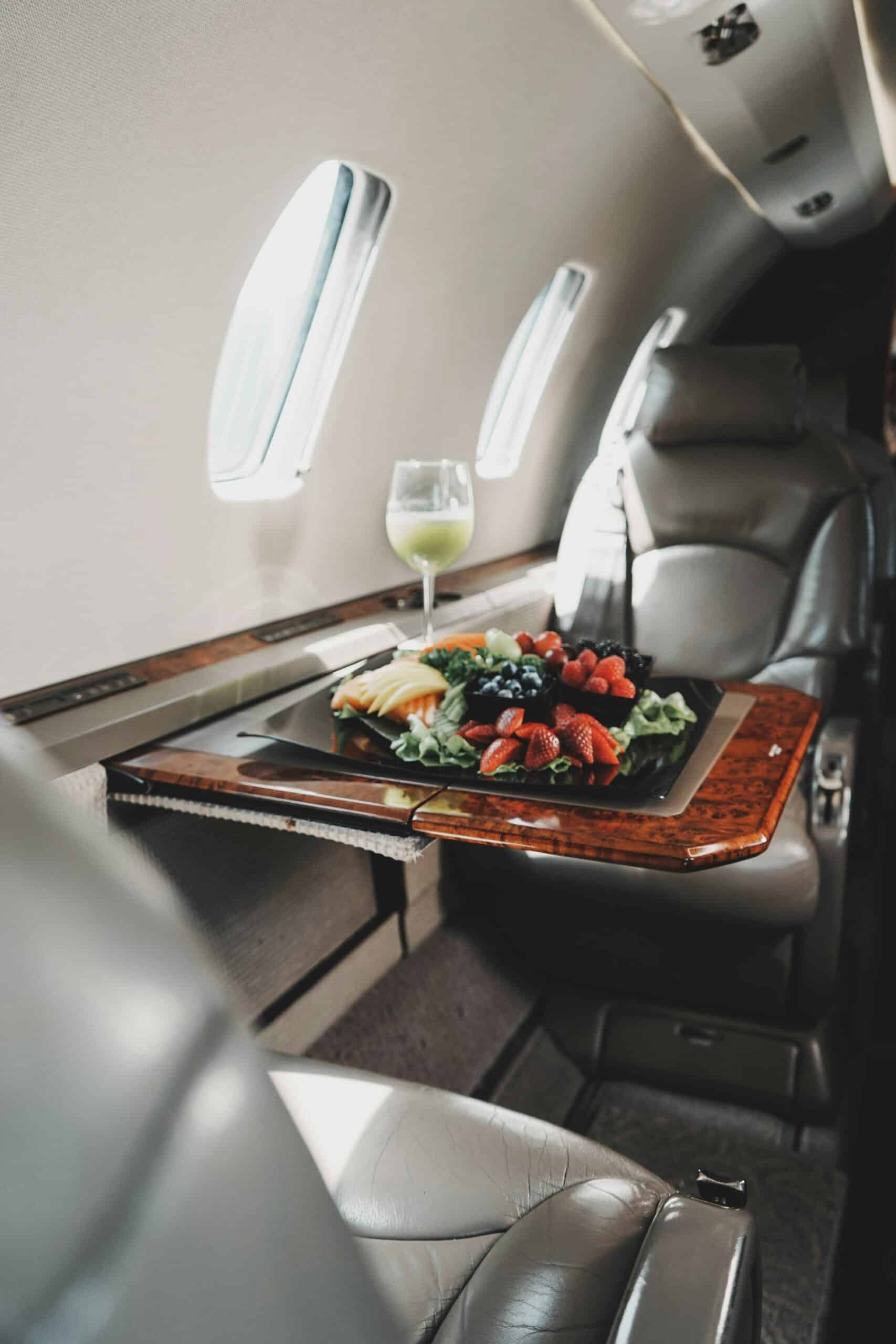
Commercial aviation has spent decades trying to solve the in-flight dining problem with limited success. The constraints are structural: scale, altitude effects on taste perception, galley limitations, and the impossibility of freshness at scale conspire against quality regardless of investment.
Private aviation has none of these constraints — and the finest private jet catering is not a compromise version of good food. It is genuinely exceptional dining that happens to be served at 45,000 feet.
The Altitude Effect and How to Design Around It
Air pressure at cruise altitude suppresses taste perception — specifically the sensitivity to salt and sweetness decreases by approximately 30%, while umami and fatty flavors are relatively unaffected. This is not a minor consideration; it means that food designed for ground-level consumption tastes flat at altitude.
The finest private catering providers design their menus specifically for high-altitude service — increasing seasoning appropriately, favoring ingredients whose flavors are altitude-resilient (aged cheeses, cured meats, umami-rich preparations), and pairing wines that express themselves well in dry cabin air (fuller-bodied reds with good tannin structure rather than delicate whites that close up at altitude).
The Provision Brief: The Document That Changes Everything
Every private aviation catering experience lives or dies on the quality of the provision brief submitted before the flight. A good provision brief covers: dietary requirements and allergies for every passenger, preferred cuisines and specific ingredients to avoid, wine and spirits preferences (including specific producers or vintages if relevant), mineral water preferences (still vs. sparkling, temperature, brand), coffee preferences (type, strength, milk), and any specific requests relevant to the journey’s purpose (celebratory bottles, business meeting setup, children’s meals).
The difference between a brief that takes three minutes to complete and one that takes fifteen minutes is the difference between a catered flight and a personalized culinary experience.
The Suppliers Worth Knowing
The finest private aviation catering operations globally: On Air Dining (London) — the gold standard for European private jet catering, serving clients from Gulfstreams to BBJs with restaurant-quality sourcing and preparation. Cuisine Solutions (global) — specialists in sous-vide preparation specifically designed for high-altitude service quality. Joël Robuchon at 35,000 (partnership arrangements with select operators) — Michelin-starred menu curation for clients who require culinary distinction as part of the journey.
Wine at Altitude: The Selection Strategy
Altitude affects wine as dramatically as it affects food. The dry cabin environment (humidity typically 10-15% in a private jet cabin, lower than the Sahara Desert) accelerates evaporation and concentrates flavors in red wines while stripping delicate aromatics from whites.
The altitude-intelligent wine selection favors: Napa Valley Cabernets and Rhône Valley reds for long-haul overnight flights, Aged Burgundies (which have the structural complexity to maintain interest through atmospheric variation), Grower Champagnes over non-vintage house blends (the autolytic complexity holds better at altitude), and still mineral water as the essential companion to any wine selection.
The Cellar-to-Cabin Service
Several operators now offer arrangements in which clients travel with their own cellar bottles — wines sourced and cellared personally, transported in temperature-controlled cases and decanted at altitude by trained crew. This is not an eccentric luxury; for a client with a serious wine relationship, drinking a mature Burgundy from their own cellar at 45,000 feet over the Atlantic is a particular pleasure that no restaurant can offer.
At Hype Luxury, our catering coordination team manages the provision brief, sourcing, and delivery logistics for every charter booking — because the meal at altitude should be as memorable as the destination.