

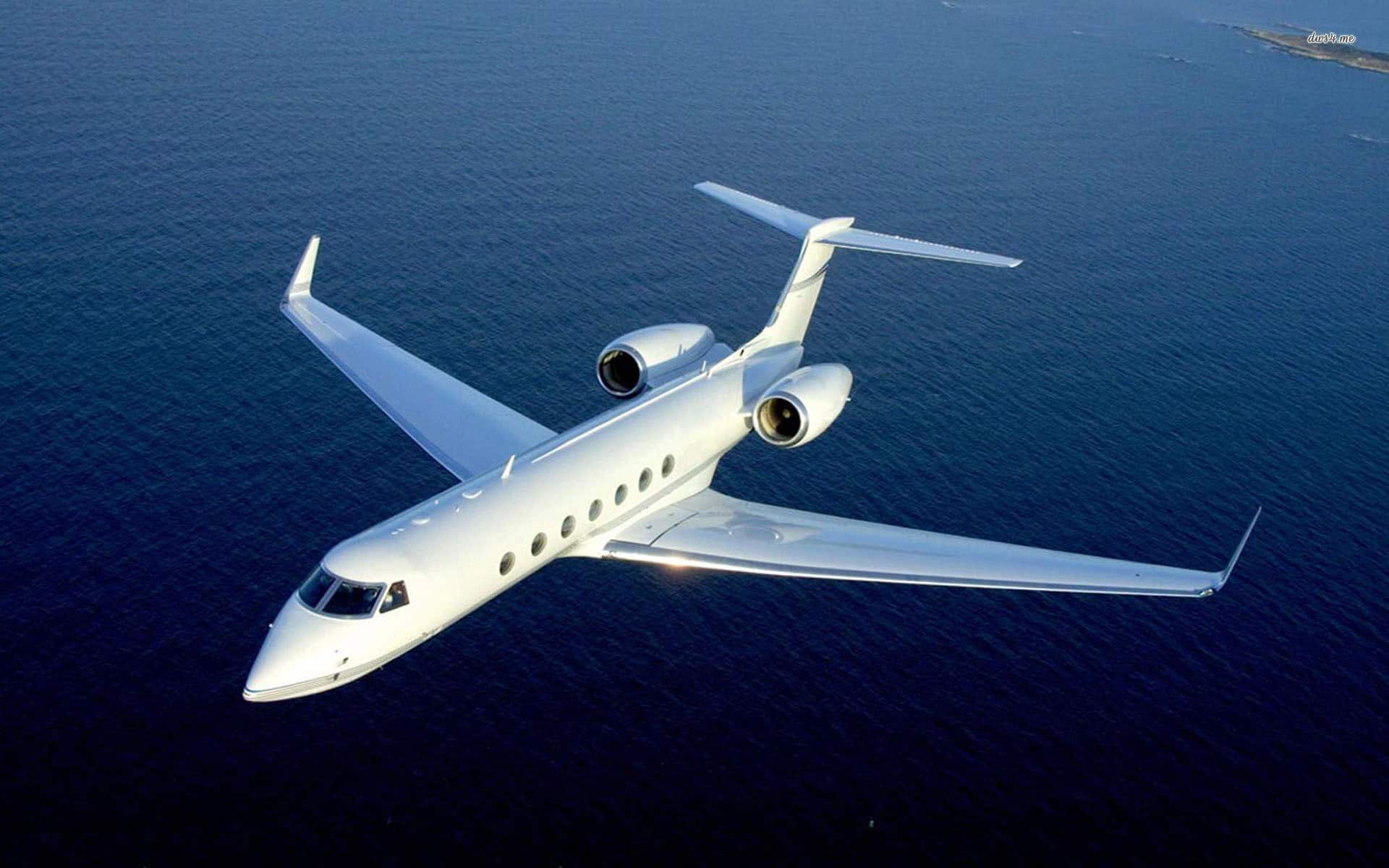
Something is changing in the way the world’s most active principals use their aircraft.
It started quietly. A family office in Singapore requested a cabin reconfiguration that removed the traditional club seating layout and replaced it with a communication hub — multiple screens, always-on satellite connectivity, and a table large enough for four people to work simultaneously across different time zones.
Then a principal in London requested the same. Then three more across the Gulf.
The private jet, for decades positioned as the ultimate in airborne comfort, is being quietly repurposed by those who use it most seriously. It is becoming the world’s most productive meeting room — one that happens to travel at 600 miles per hour and parks itself wherever the agenda demands.
The implications are significant. Aircraft selection is no longer purely about range and cabin size. Connectivity architecture — how reliably the aircraft maintains high-speed internet over oceans, over restricted airspace, in and out of remote destinations — has become a primary specification requirement for the most demanding operators.
Operators who have not invested in Starlink Aviation or equivalent high-throughput satellite systems are already losing the most discerning clients. Quietly. Without complaint. Those clients simply don’t renew.
The aircraft that earns its place in a serious principal’s life in 2025 is not the most opulent. It is the most functional at altitude. The one that collapses the distance between wheels-up and a decision made, a deal closed, a problem solved.
Comfort remains essential. But the jet that offers only comfort is being left on the ramp.
Curated by: Hype Luxury