

Rent Luxury Cars, Jets and Yacht
Hype Luxury Blog
No Result
View All Result
  • Blog
  • News & Press
  • Videos
  • Write For Us
  • Login
  • Blog
  • News & Press
  • Videos
  • Write For Us
  • Login
Hype Luxury Blog
No Result
View All Result
Hype Luxury Blog
No Result
View All Result

The Real Reason Luxury Brands Are Dying — They Started Caring About Everyone.

The Real Reason Luxury Brands Are Dying — They Started Caring About Everyone.
Previous Post

Digital Product Passports: How We Verify the Provenance of Every Luxury Asset.

Next Post

Art in Motion

It decided that aspiration was more valuable than exclusion. That the pyramid should widen at the top. That the right marketing strategy could make a €50,000 handbag feel attainable to someone who would spend three years saving for it — and that this was good for the brand.

It was not good for the brand.

It was good for the quarter.


What Luxury Actually Is

Luxury is not price. It is not craftsmanship. It is not heritage, though heritage helps.

Luxury is the feeling that what you have cannot be had by everyone.

The moment that feeling becomes negotiable — the moment the brand begins to engineer accessibility, to court the aspirational tier, to place entry-level products in the windows of airports — something irreversible happens.

The people at the top leave.

Not dramatically. Not with a statement. They simply stop arriving. And the brand, chasing volume at the bottom, does not notice until the top is already gone.


The Evidence Is Everywhere

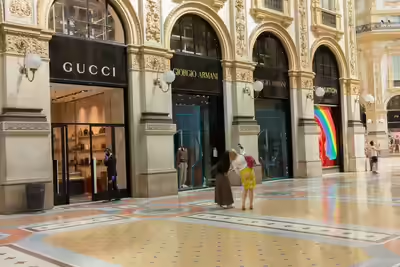
Gucci. Burberry. Balenciaga. Each of them, at different points, made the same miscalculation.

Gucci put its logo on everything and sold it to everyone. The result was a brand that meant something different — something lesser — to the people who had made it mean something in the first place. The recovery required years, a new creative director, and a deliberate retreat from the market they had spent a decade cultivating.

Burberry’s trench coat became associated with a demographic the brand had never intended to dress. The check pattern — iconic, British, genuinely beautiful — was retired because it had been too successfully adopted.

The pattern itself was fine. The problem was availability.


The Hermès Exception

Hermès has watched every one of these cycles from a position of unassailable calm.

They do not have an entry-level strategy. They do not court the aspirational tier. Their waiting lists are not a marketing tactic — they are a consequence of genuine scarcity, maintained deliberately, across generations of family ownership that never confused revenue with value.

A Birkin does not go on sale. It does not appear in an airport window. It is not available because you want it. It is available because they decided — after a relationship, after time, after a judgment about who you are as a client — that you should have one.

That inaccessibility is not arrogance. It is the product.

And the product has never been more valuable.


What Is Happening Right Now

The luxury correction of 2024–2025 was not a demand problem.

It was a meaning problem.

Consumers who had stretched to buy into brands that had stretched to reach them discovered, simultaneously, that the stretch had not delivered what it promised. The bag did not confer the status. The logo did not open the door. The brand had sold access to something it had already diluted past the point of value.

The brands that survived — and will continue to survive — are the ones that held the line. That said no more than yes. That understood that in luxury, the client you turn away is as important as the client you welcome.


The Lesson

Growth is not a luxury strategy. It is a luxury killer — deployed slowly enough that the symptoms appear after the damage is done.

The brands worth wearing, driving, commissioning, and being seen in are the ones that never needed your business badly enough to change what they were to get it.

That standard is rare.

Which is, of course, the point.


The best luxury brands don’t chase clients. They select them.

Tags: #BrandStrategy#Burberry#Exclusivity#Gucci#Hermes#LuxuryBrands#LuxuryEvolution#UHNWI#UltraLuxuryhypeluxury
Climate Activists Should Be Thanking Private Jets, Not Banning Them.

Climate Activists Should Be Thanking Private Jets, Not Banning Them.

February 21, 2026
AI Will Not Democratise Luxury. It Will Make It More Exclusive.

AI Will Not Democratise Luxury. It Will Make It More Exclusive.

February 21, 2026
Why the Old Rich Are Terrified of the New Rich.

Why the Old Rich Are Terrified of the New Rich.

February 21, 2026
Indian Billionaires Don’t Get the Respect They’ve Earned. That Changes Now.

Indian Billionaires Don’t Get the Respect They’ve Earned. That Changes Now.

February 21, 2026
The Guilt Around Flying Private Is Manufactured. Here’s Who Made It.

The Guilt Around Flying Private Is Manufactured. Here’s Who Made It.

February 21, 2026
The Real Reason Luxury Brands Are Dying — They Started Caring About Everyone.
Previous Post

Digital Product Passports: How We Verify the Provenance of Every Luxury Asset.

Next Post

Art in Motion

It decided that aspiration was more valuable than exclusion. That the pyramid should widen at the top. That the right marketing strategy could make a €50,000 handbag feel attainable to someone who would spend three years saving for it — and that this was good for the brand.

It was not good for the brand.

It was good for the quarter.


What Luxury Actually Is

Luxury is not price. It is not craftsmanship. It is not heritage, though heritage helps.

Luxury is the feeling that what you have cannot be had by everyone.

The moment that feeling becomes negotiable — the moment the brand begins to engineer accessibility, to court the aspirational tier, to place entry-level products in the windows of airports — something irreversible happens.

The people at the top leave.

Not dramatically. Not with a statement. They simply stop arriving. And the brand, chasing volume at the bottom, does not notice until the top is already gone.


The Evidence Is Everywhere

Gucci. Burberry. Balenciaga. Each of them, at different points, made the same miscalculation.

Gucci put its logo on everything and sold it to everyone. The result was a brand that meant something different — something lesser — to the people who had made it mean something in the first place. The recovery required years, a new creative director, and a deliberate retreat from the market they had spent a decade cultivating.

Burberry’s trench coat became associated with a demographic the brand had never intended to dress. The check pattern — iconic, British, genuinely beautiful — was retired because it had been too successfully adopted.

The pattern itself was fine. The problem was availability.


The Hermès Exception

Hermès has watched every one of these cycles from a position of unassailable calm.

They do not have an entry-level strategy. They do not court the aspirational tier. Their waiting lists are not a marketing tactic — they are a consequence of genuine scarcity, maintained deliberately, across generations of family ownership that never confused revenue with value.

A Birkin does not go on sale. It does not appear in an airport window. It is not available because you want it. It is available because they decided — after a relationship, after time, after a judgment about who you are as a client — that you should have one.

That inaccessibility is not arrogance. It is the product.

And the product has never been more valuable.


What Is Happening Right Now

The luxury correction of 2024–2025 was not a demand problem.

It was a meaning problem.

Consumers who had stretched to buy into brands that had stretched to reach them discovered, simultaneously, that the stretch had not delivered what it promised. The bag did not confer the status. The logo did not open the door. The brand had sold access to something it had already diluted past the point of value.

The brands that survived — and will continue to survive — are the ones that held the line. That said no more than yes. That understood that in luxury, the client you turn away is as important as the client you welcome.


The Lesson

Growth is not a luxury strategy. It is a luxury killer — deployed slowly enough that the symptoms appear after the damage is done.

The brands worth wearing, driving, commissioning, and being seen in are the ones that never needed your business badly enough to change what they were to get it.

That standard is rare.

Which is, of course, the point.


The best luxury brands don’t chase clients. They select them.

Tags: #BrandStrategy#Burberry#Exclusivity#Gucci#Hermes#LuxuryBrands#LuxuryEvolution#UHNWI#UltraLuxuryhypeluxury
Climate Activists Should Be Thanking Private Jets, Not Banning Them.

Climate Activists Should Be Thanking Private Jets, Not Banning Them.

February 21, 2026
AI Will Not Democratise Luxury. It Will Make It More Exclusive.

AI Will Not Democratise Luxury. It Will Make It More Exclusive.

February 21, 2026
Why the Old Rich Are Terrified of the New Rich.

Why the Old Rich Are Terrified of the New Rich.

February 21, 2026
Indian Billionaires Don’t Get the Respect They’ve Earned. That Changes Now.

Indian Billionaires Don’t Get the Respect They’ve Earned. That Changes Now.

February 21, 2026
The Guilt Around Flying Private Is Manufactured. Here’s Who Made It.

The Guilt Around Flying Private Is Manufactured. Here’s Who Made It.

February 21, 2026

Hype app logo

Download app

Hype app logo

Sign up to our newsletter to stay updated

johnsmith@example.com

Company

  • About
  • News & Press
  • Blog
  • T & C
  • Privacy

Contact

  • Contact
  • Partnership
  • Help

Social

  • Instagram
  • Youtube
  • LinkedIn
  • Facebook
  • Twitter
No Result
View All Result
  • Home
  • News & Press
  • Videos
  • Write For Us
  • Login
  • RENT LUXURY CARS
  • Login
  • Sign Up