

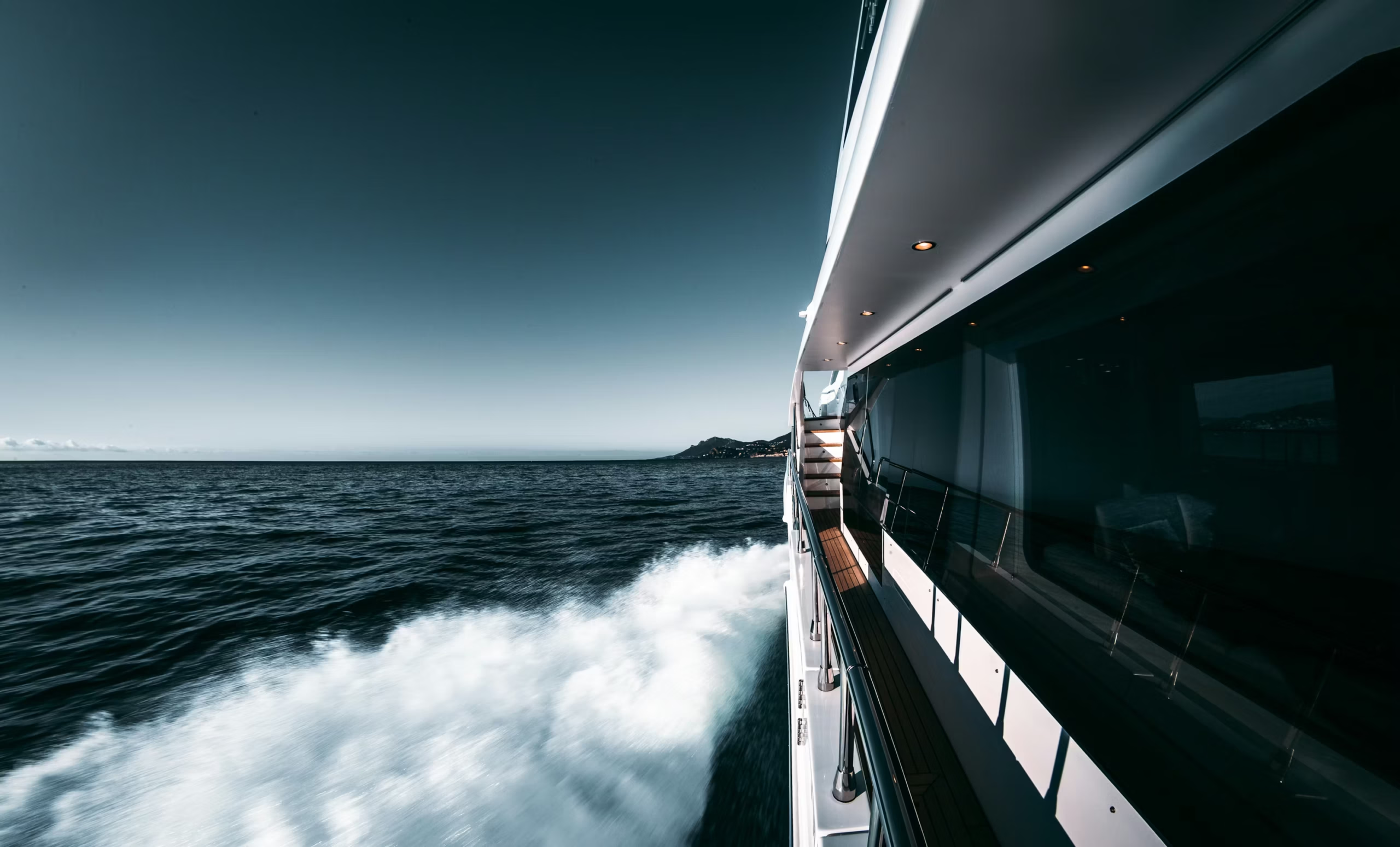
In 2022, a Russian oligarch’s 162-metre superyacht was seized by Spanish authorities. The yacht had a crew of 60, a swimming pool, a helipad, a submarine, and a wine cellar valued at several million dollars. The annual running cost of this vessel, by industry estimates, was approximately 10% of its acquisition value — roughly $60 to $70 million per year. To operate it. Before any voyages were planned.
This is the first thing serious buyers learn: the purchase price is almost irrelevant.
The 10% Rule
The maritime industry runs on a rough calculation — annual operating costs of a superyacht approximate 10% of its market value. For a €20 million vessel, that is €2 million per year in crew salaries, insurance, maintenance, fuel, port fees, and classification surveys. Before you leave the dock.
This is not a deterrent to the right buyer. It is information for anyone considering ownership without fully understanding the asset class. A superyacht is not a possession. It is a company. It requires a full-time crew, a management firm, a legal entity for flag registration, and constant mechanical attention.
The Crew Economy
A superyacht of meaningful size requires a captain, first officer, chief engineer, chef, deck crew, interior crew, and often a private doctor and security officer. These are not part-time positions. They are full-time employment, with maritime law governing contracts, leave, and compensation. The captain of a 60-metre yacht earns between €100,000 and €200,000 annually. The chef, if sourced from a Michelin background, commands comparable rates.
The crew lives on the vessel. Their welfare, food, communication, and shore leave is the owner’s operational responsibility. Managing a superyacht crew is, structurally, identical to running a small boutique hotel — with the additional complexity that it moves.
Charter as Offset Strategy
Most superyacht owners who are not in the top 0.01% of wealth globally offset costs through charter. A well-positioned 50-metre yacht in peak Mediterranean season generates €200,000 to €400,000 per week on the charter market. This does not eliminate operating costs, but it restructures the economics considerably.
The trade-off is availability. Charter commitments mean the vessel is not always accessible when the owner wants it. The ultra-wealthy solve this by owning multiple vessels or by building charter windows around their own use calendar — a level of planning that itself requires professional management.
Why the Smart Entry Point is Charter, Not Ownership
For individuals entering this world — including many of our clients at hype.luxury — the intelligent first move is superyacht charter. Multiple weeks across different vessel types, different seas, different crew configurations. This education is both experiential and strategic: by the time a client is ready to acquire, they understand exactly what they want.
Ownership without that foundation is how people end up with the wrong vessel — or with the right vessel in the wrong sea.