

There is a route in global luxury that, when you look at it honestly, may be the most strategically perfect mobility corridor on earth. It connects Singapore to the Maldives, and it is one of the most quietly valuable assets in the entire Asian UHNW playbook.
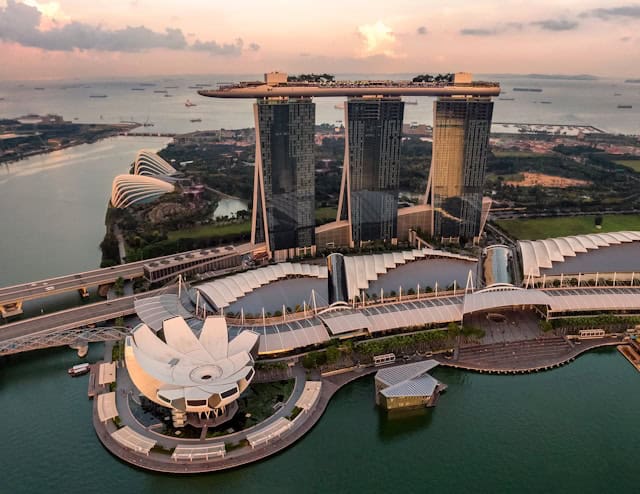
Singapore’s position in the Asian wealth map needs no extensive introduction. The city has become the operational headquarters of Asian wealth — the single family office capital, the legal and trust structuring centre, the bridge between global and Asian capital markets. The number of single family offices operating from Singapore has expanded dramatically, and the city’s UHNW client base now includes some of the most sophisticated wealth holders anywhere in Asia. The discretion is genuine, the regulatory environment is stable, and the lifestyle infrastructure has matured into something that no other Southeast Asian city can match.
What is less appreciated, and what makes this story interesting, is what the Singapore-Maldives corridor specifically delivers. A private jet flight from Singapore to Malé runs roughly four to five hours — short enough for a weekend, long enough to feel like a genuine journey. The Maldives, as covered in earlier writing, has matured into one of the world’s premium charter and resort destinations. The combination produces something rare: a UHNW lifestyle base from which one of the world’s great leisure destinations is genuinely a weekend trip rather than a holiday.
The mobility playbook this enables is sophisticated and increasingly common among the Singapore UHNW set. Friday afternoon: private aviation from Seletar or Changi to Malé. Friday evening: seaplane to resort or chartered yacht waiting offshore. Saturday and Sunday: full Maldivian experience — diving, snorkelling, the marine environment, the genuine privacy of the atolls. Monday morning: return flight to Singapore, in the office by lunchtime. This is not theoretical. This is the actual lifestyle that the Singapore-based principal can build into a regular pattern, multiple weekends per quarter, with operational discipline that few other locations on earth can match.
The implications for charter and ownership patterns are direct. Singapore-based clients have become some of the most reliable repeat customers of Maldivian charter operators, with relationships built across multiple seasons rather than single transactions. The Maldivian resort residence market — branded villas owned within resort complexes — has found significant Singapore-based buyers who use these as recurring weekend properties rather than once-yearly holiday homes. The integration is becoming part of how serious Singapore wealth actually lives.
The yachting dimension deserves specific attention. The Maldives’ winter charter season aligns perfectly with the wettest months of Singapore’s calendar, providing serious leisure substitution at exactly the moment domestic alternatives are least attractive. Yachts that operate Mediterranean summers and reposition to the Maldives for the November-to-April season find Singapore-based clients among their most consistent winter charter customers. The economics work both for the boats and for the clients, and the relationships that result are typically multi-year.
The operational sophistication of Singapore’s UHNW base shapes the corridor’s character. The clients booking these trips are organised, demanding and time-disciplined in ways that match Singapore’s broader business culture. The operators who succeed in serving this corridor are the ones who treat scheduling, communication and execution with the same precision that the clients apply to their own businesses. The romantic, loosely planned charter that works in some markets does not survive contact with Singapore-based client expectations.
There is a generational dimension that is worth noting. The family offices that have moved to Singapore over the past five years often include younger principals — second and third generations of Asian wealth who have chosen Singapore as their personal base for reasons of education, lifestyle and family infrastructure. These principals are precisely the cohort most engaged with experiential luxury, and the Maldives-as-weekend-destination model maps to their actual lifestyle priorities better than older luxury templates.
At Hype Luxury, the Singapore-Maldives corridor has emerged as one of our most strategically important integrated service flows. We coordinate the full vertical: private aviation, seaplane transfer logistics, yacht charter, on-island vehicle positioning where required, and the broader hospitality coordination that turns the corridor into a genuine extension of the principal’s life rather than a series of separate transactions. The repeat-engagement patterns we see on this corridor are unlike almost anything else in our global portfolio.
The deeper insight is about how geography, infrastructure and wealth culture combine to produce specific lifestyle possibilities. Singapore’s strategic position, the Maldives’ specific charter maturity, the air-distance arithmetic and the cultural fit between the two markets have produced a corridor that simply works better than its alternatives. The Mediterranean summer is enormous and historic, but it is not a weekend trip for Asian principals. The Caribbean is wonderful but distant. The Pacific is spectacular but far. The Maldives, from Singapore, is the sweet spot.
For the Asian wealth class with the means and discipline to use it, the Singapore-Maldives corridor is one of the most underrated lifestyle assets on earth. The principals using it well are quietly enjoying one of the best leisure mobility patterns ever engineered. The brands building for this corridor are positioned at the centre of Asian wealth’s most strategically perfect route. In 2026, the rest of the global luxury industry should pay attention.