
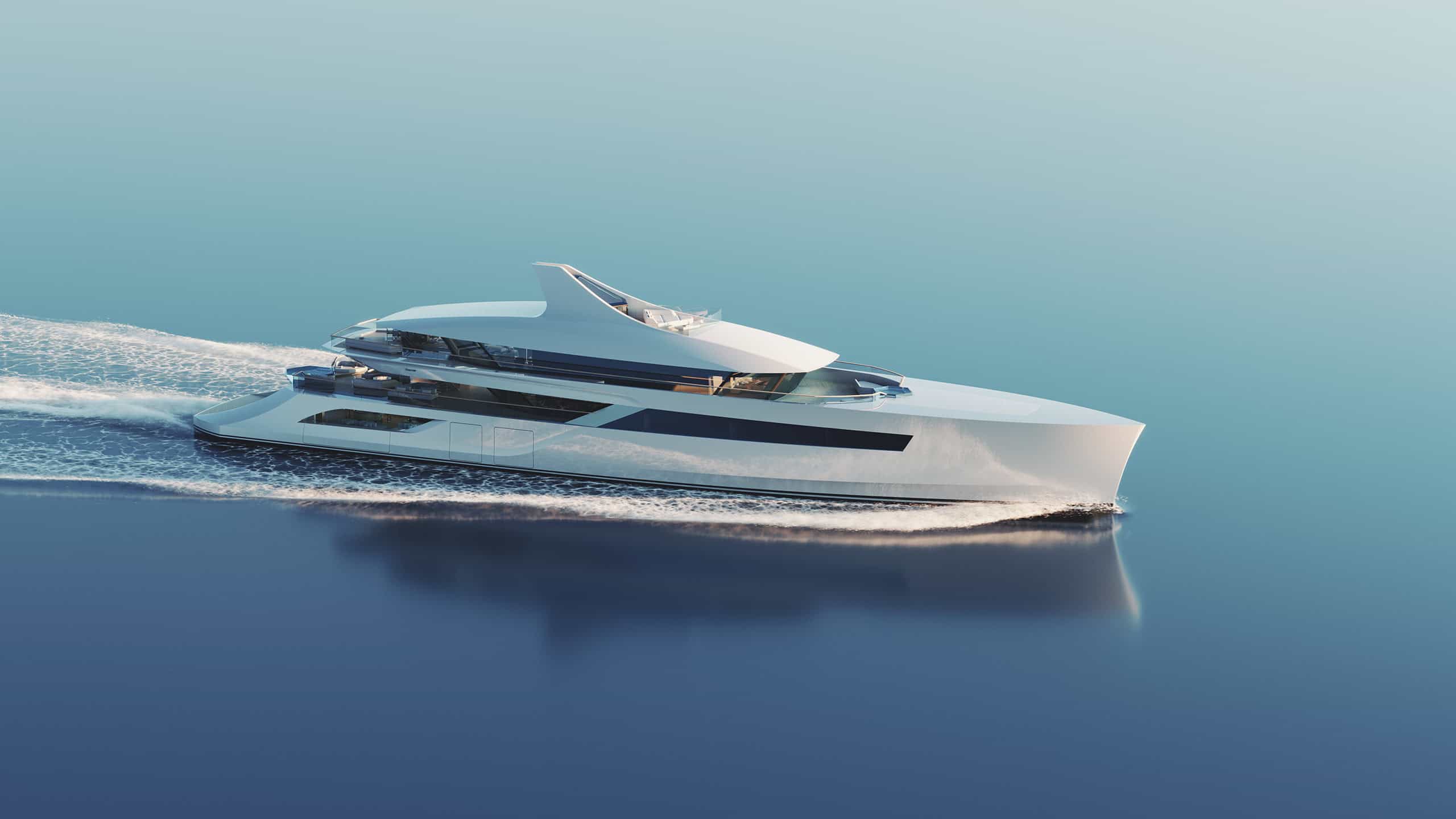
The most important boardroom of 2026 has no fixed address. It has a helipad, a Starlink terminal delivering military-grade encrypted connectivity, and a hull cutting silently through the Aegean at seventeen knots.
The superyacht has always been the ultimate status symbol. But something fundamental has shifted in how the world’s most consequential individuals relate to their vessels. The yacht is no longer a retreat from work — it is work, optimised.
With the proliferation of high-bandwidth satellite internet through platforms like Starlink and OneWeb, a 90-metre superyacht anchored off Capri now has better internet infrastructure than most Manhattan office towers. Video calls with Tokyo happen without latency. Encrypted deal communications flow securely. Principals can sign documents, execute trades, and chair board meetings — all while the chef prepares a tasting menu designed by a Michelin-starred consultant.
The implications for family offices are significant. When a principal operates from a floating headquarters, the traditional infrastructure of wealth management — the fixed offices, the scheduled meetings, the rigid geography — must flex to accommodate genuine mobility. The most sophisticated family offices have already adapted. They have set up secure document portals, integrated time-zone protocols into communication stacks, and identified the marinas worldwide where reliable connectivity and discretion can be simultaneously guaranteed.
The vessels themselves have evolved accordingly. Today’s new-build superyachts are commissioned with infrastructure that would have seemed extraordinary on a corporate campus five years ago. Dedicated server rooms. Secondary satellite arrays as redundant backups. Vibration-dampened video conference suites where ambient engine noise drops to near zero. Some owners have gone further, installing cryotherapy chambers, full medical facilities staffed by onboard doctors, and laboratory-grade air purification — because staying mentally sharp at the highest levels of wealth requires treating the body with the same rigour as the balance sheet.
There is also the matter of sovereign flexibility. A principal operating from a vessel registered under a flag of their choosing, in international waters, occupies a uniquely unconstrained position — legally, fiscally, and operationally. For UHNW individuals managing complex global portfolios, this is not an incidental benefit. It is often a primary design criterion.
The 2026 superyacht market reflects all of this. Explorer yachts — vessels built for long-range, ice-class, multi-environment capability — continue to dominate new commissions. These are not boats for Cannes in July. They are platforms for principals who might spend three months in the Norwegian fjords, then pivot to the Maldives, then position in the Caribbean — without once needing to set foot in an airport.
For the family office managing a neo-nomadic principal, the superyacht-as-headquarters model demands a new kind of operational thinking. Security protocols, document handling, staff rosters, and connectivity redundancies must all be designed for a platform that is, by definition, always moving. The offices that have solved this problem have a significant competitive advantage in serving the clients who live this way.
The era of the yacht as a leisure toy is over. The era of the yacht as a sovereign mobile enterprise — where the deal gets done, the family gathers, and the legacy is built, all on the same deck — that is very much underway. And those who understand it earliest will serve their principals best.