

Rent Luxury Cars, Jets and Yacht
Hype Luxury Blog
No Result
View All Result
  • Blog
  • News & Press
  • Videos
  • Write For Us
  • Login
  • Blog
  • News & Press
  • Videos
  • Write For Us
  • Login
Hype Luxury Blog
No Result
View All Result
Hype Luxury Blog
No Result
View All Result

The Greater Bay Area Effect: How China’s Tier-One Wealth Is Reshaping Asian Luxury

The Greater Bay Area Effect: How China’s Tier-One Wealth Is Reshaping Asian Luxury
Previous Post

Seoul’s New Money: How Korea’s Tech Generation Is Building a Wealth Culture from Scratch

Next Post

The Maldives Migration: Why Asia’s Wealthiest Now Treat the Indian Ocean as a Second Home

There is a region of mainland China that has, in the space of two decades, become one of the most concentrated wealth-creation zones in human history — and its mobility patterns are rewriting Asian luxury in ways that older centres of regional wealth are only beginning to understand.

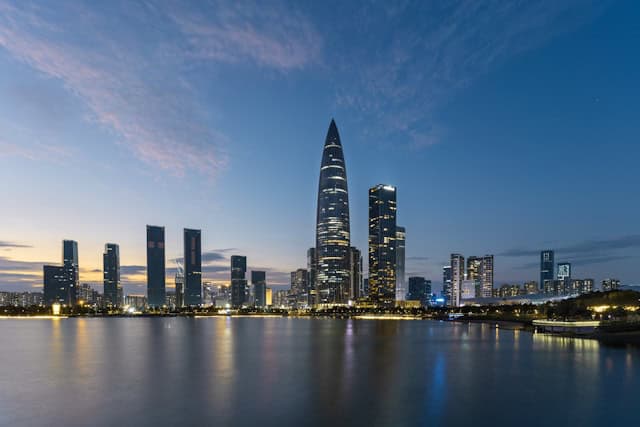
The Greater Bay Area — the megaregion encompassing Hong Kong, Macau, Shenzhen, Guangzhou and seven other cities of the Pearl River Delta — represents an economic agglomeration with a combined GDP rivalling major nations and a UHNW population concentration that no other Asian region can match. Shenzhen alone, the city that exemplifies the technology-driven wealth surge, has produced more billionaires per square kilometre than any comparable urban area in recent history.

The wealth profile of this region is distinct from any other Asian UHNW concentration. Where Hong Kong wealth is dynastic and Beijing wealth often politically connected, the Greater Bay Area’s new money is overwhelmingly entrepreneurial and technology-anchored. Founders of the major Chinese internet companies, hardware giants, electric vehicle pioneers and consumer technology firms cluster here. The wealth is young, technically sophisticated and globally oriented in ways that complicate the conventional luxury industry’s assumptions about Chinese clients.

The mobility patterns reflect this profile. Private aviation between Shenzhen and Hong Kong is one of the shortest and most frequently flown private routes in the world — barely fifteen minutes in the air, but operationally complex enough that only the most sophisticated operators handle it well. Helicopter services across the region have matured significantly. The corridor from the Bay Area to Macau, particularly for high-roller gaming clientele, supports its own specialist mobility ecosystem.

The international footprint is what increasingly defines the Greater Bay Area’s UHNW class. The principals here travel far more internationally than their wealth predecessors did, with London, Singapore, Tokyo, Dubai and increasingly the Mediterranean and Caribbean appearing as routine destinations on their flight logs. The shift toward outbound travel by mainland Chinese UHNW, after the constraints of the early 2020s, has been one of the most consequential trends in Asian luxury — and the Greater Bay Area accounts for a disproportionate share of it.

The automotive culture of the region has its own particular intensity. Mainland Chinese UHNW automotive purchasing has reshaped the order books of every major luxury manufacturer. Rolls-Royce, Bentley, Ferrari, Lamborghini, McLaren — all have built significant portions of their global growth on Greater Bay Area demand. The rental market in the region remains constrained relative to the wealth profile, but the international rental footprint of mainland Chinese clients is rising sharply, with Dubai, the Mediterranean and increasingly Tokyo all reporting significant Chinese-origin demand in their luxury fleets.

The yachting story is one of the most interesting and least understood. Chinese yacht ownership has grown substantially over the past decade, with both domestic operation in regional waters and increasing engagement with international charter markets. The Greater Bay Area, with its access to the South China Sea and proximity to Southeast Asian cruising grounds, has emerged as the most active mainland Chinese yachting region. Charter activity from Greater Bay Area clients in the Mediterranean and Caribbean has risen meaningfully and continues to grow.

The service expectations of mainland Chinese UHNW clients deserve careful consideration. The principals from this region are sophisticated, demanding and technologically fluent. They expect serious operational infrastructure — multi-language service, payment flexibility, integrated digital communication — combined with the discretion that all serious wealth ultimately requires. The luxury operators who succeed in serving them have invested heavily in capabilities that older luxury houses have been slow to develop.

The cultural dimension matters more than the global luxury industry has historically acknowledged. Mainland Chinese UHNW clients are not a single homogeneous segment. The Shanghai principal differs from the Beijing principal who differs from the Shenzhen principal. The Greater Bay Area cohort, with its technology orientation and exposure to Hong Kong’s international sensibility, sits closer to global luxury sensibility than its inland peers. Understanding these gradations is the difference between serving these clients well and missing them entirely.

For Hype Luxury, mainland Chinese clients have become an important part of our international demand, particularly in Dubai, the Mediterranean and Southeast Asian charter markets. The integration we offer across vehicle types serves this clientele well — they tend to engage with multiple categories simultaneously rather than single-asset rentals — and the discretion of our service model fits the cultural expectations of clients who have learned, often the hard way, the cost of visibility.

The deeper story is about how rapidly the Asian luxury hierarchy is being reshaped. The Greater Bay Area was a peripheral region in global luxury markets twenty years ago. It is now indispensable, and the next decade will see it move further toward the centre. The brands that build for it now will own relationships that compound for the entire generation. The brands that continue to treat mainland Chinese UHNW as an afterthought will find the next decade unforgiving.

China’s tier-one wealth is no longer the future. It is the present — and the Greater Bay Area is its most concentrated expression.


Tags: #asianmobility#chinawealth#chinesebillionaires#chineseluxury#greaterbayarea#macauwealth#PRDluxury#shenzhen#UHNWchinahypeluxury
The Singapore-Maldives Sweet Spot: Why Asia’s Most Sophisticated Wealth Hub Owns the Best Charter Corridor in the World

The Singapore-Maldives Sweet Spot: Why Asia’s Most Sophisticated Wealth Hub Owns the Best Charter Corridor in the World

June 29, 2026
Manila’s Untold Story: How Philippine Wealth Quietly Built One of Asia’s Most Personal Luxury Cultures

Manila’s Untold Story: How Philippine Wealth Quietly Built One of Asia’s Most Personal Luxury Cultures

June 29, 2026
Jakarta’s Surprise: Why Indonesia’s Wealth Capital Is Asia’s Most Underestimated Luxury Market

Jakarta’s Surprise: Why Indonesia’s Wealth Capital Is Asia’s Most Underestimated Luxury Market

June 29, 2026
The Maldives Migration: Why Asia’s Wealthiest Now Treat the Indian Ocean as a Second Home

The Maldives Migration: Why Asia’s Wealthiest Now Treat the Indian Ocean as a Second Home

June 29, 2026
The Greater Bay Area Effect: How China’s Tier-One Wealth Is Reshaping Asian Luxury

The Greater Bay Area Effect: How China’s Tier-One Wealth Is Reshaping Asian Luxury

June 29, 2026
The Greater Bay Area Effect: How China’s Tier-One Wealth Is Reshaping Asian Luxury
Previous Post

Seoul’s New Money: How Korea’s Tech Generation Is Building a Wealth Culture from Scratch

Next Post

The Maldives Migration: Why Asia’s Wealthiest Now Treat the Indian Ocean as a Second Home

There is a region of mainland China that has, in the space of two decades, become one of the most concentrated wealth-creation zones in human history — and its mobility patterns are rewriting Asian luxury in ways that older centres of regional wealth are only beginning to understand.

The Greater Bay Area — the megaregion encompassing Hong Kong, Macau, Shenzhen, Guangzhou and seven other cities of the Pearl River Delta — represents an economic agglomeration with a combined GDP rivalling major nations and a UHNW population concentration that no other Asian region can match. Shenzhen alone, the city that exemplifies the technology-driven wealth surge, has produced more billionaires per square kilometre than any comparable urban area in recent history.

The wealth profile of this region is distinct from any other Asian UHNW concentration. Where Hong Kong wealth is dynastic and Beijing wealth often politically connected, the Greater Bay Area’s new money is overwhelmingly entrepreneurial and technology-anchored. Founders of the major Chinese internet companies, hardware giants, electric vehicle pioneers and consumer technology firms cluster here. The wealth is young, technically sophisticated and globally oriented in ways that complicate the conventional luxury industry’s assumptions about Chinese clients.

The mobility patterns reflect this profile. Private aviation between Shenzhen and Hong Kong is one of the shortest and most frequently flown private routes in the world — barely fifteen minutes in the air, but operationally complex enough that only the most sophisticated operators handle it well. Helicopter services across the region have matured significantly. The corridor from the Bay Area to Macau, particularly for high-roller gaming clientele, supports its own specialist mobility ecosystem.

The international footprint is what increasingly defines the Greater Bay Area’s UHNW class. The principals here travel far more internationally than their wealth predecessors did, with London, Singapore, Tokyo, Dubai and increasingly the Mediterranean and Caribbean appearing as routine destinations on their flight logs. The shift toward outbound travel by mainland Chinese UHNW, after the constraints of the early 2020s, has been one of the most consequential trends in Asian luxury — and the Greater Bay Area accounts for a disproportionate share of it.

The automotive culture of the region has its own particular intensity. Mainland Chinese UHNW automotive purchasing has reshaped the order books of every major luxury manufacturer. Rolls-Royce, Bentley, Ferrari, Lamborghini, McLaren — all have built significant portions of their global growth on Greater Bay Area demand. The rental market in the region remains constrained relative to the wealth profile, but the international rental footprint of mainland Chinese clients is rising sharply, with Dubai, the Mediterranean and increasingly Tokyo all reporting significant Chinese-origin demand in their luxury fleets.

The yachting story is one of the most interesting and least understood. Chinese yacht ownership has grown substantially over the past decade, with both domestic operation in regional waters and increasing engagement with international charter markets. The Greater Bay Area, with its access to the South China Sea and proximity to Southeast Asian cruising grounds, has emerged as the most active mainland Chinese yachting region. Charter activity from Greater Bay Area clients in the Mediterranean and Caribbean has risen meaningfully and continues to grow.

The service expectations of mainland Chinese UHNW clients deserve careful consideration. The principals from this region are sophisticated, demanding and technologically fluent. They expect serious operational infrastructure — multi-language service, payment flexibility, integrated digital communication — combined with the discretion that all serious wealth ultimately requires. The luxury operators who succeed in serving them have invested heavily in capabilities that older luxury houses have been slow to develop.

The cultural dimension matters more than the global luxury industry has historically acknowledged. Mainland Chinese UHNW clients are not a single homogeneous segment. The Shanghai principal differs from the Beijing principal who differs from the Shenzhen principal. The Greater Bay Area cohort, with its technology orientation and exposure to Hong Kong’s international sensibility, sits closer to global luxury sensibility than its inland peers. Understanding these gradations is the difference between serving these clients well and missing them entirely.

For Hype Luxury, mainland Chinese clients have become an important part of our international demand, particularly in Dubai, the Mediterranean and Southeast Asian charter markets. The integration we offer across vehicle types serves this clientele well — they tend to engage with multiple categories simultaneously rather than single-asset rentals — and the discretion of our service model fits the cultural expectations of clients who have learned, often the hard way, the cost of visibility.

The deeper story is about how rapidly the Asian luxury hierarchy is being reshaped. The Greater Bay Area was a peripheral region in global luxury markets twenty years ago. It is now indispensable, and the next decade will see it move further toward the centre. The brands that build for it now will own relationships that compound for the entire generation. The brands that continue to treat mainland Chinese UHNW as an afterthought will find the next decade unforgiving.

China’s tier-one wealth is no longer the future. It is the present — and the Greater Bay Area is its most concentrated expression.

Tags: #asianmobility#chinawealth#chinesebillionaires#chineseluxury#greaterbayarea#macauwealth#PRDluxury#shenzhen#UHNWchinahypeluxury
The Singapore-Maldives Sweet Spot: Why Asia’s Most Sophisticated Wealth Hub Owns the Best Charter Corridor in the World

The Singapore-Maldives Sweet Spot: Why Asia’s Most Sophisticated Wealth Hub Owns the Best Charter Corridor in the World

June 29, 2026
Manila’s Untold Story: How Philippine Wealth Quietly Built One of Asia’s Most Personal Luxury Cultures

Manila’s Untold Story: How Philippine Wealth Quietly Built One of Asia’s Most Personal Luxury Cultures

June 29, 2026
Jakarta’s Surprise: Why Indonesia’s Wealth Capital Is Asia’s Most Underestimated Luxury Market

Jakarta’s Surprise: Why Indonesia’s Wealth Capital Is Asia’s Most Underestimated Luxury Market

June 29, 2026
The Maldives Migration: Why Asia’s Wealthiest Now Treat the Indian Ocean as a Second Home

The Maldives Migration: Why Asia’s Wealthiest Now Treat the Indian Ocean as a Second Home

June 29, 2026
The Greater Bay Area Effect: How China’s Tier-One Wealth Is Reshaping Asian Luxury

The Greater Bay Area Effect: How China’s Tier-One Wealth Is Reshaping Asian Luxury

June 29, 2026


Hype Luxury Logo


Sign up to our newsletter to stay updated

johnsmith@example.com

Company

  • About
  • News & Press
  • Blog
  • T & C
  • Privacy

Contact

  • Contact
  • Partnership
  • Help

Social

  • Instagram
  • Youtube
  • LinkedIn
  • Facebook
  • Twitter
No Result
View All Result
  • Home
  • News & Press
  • Videos
  • Write For Us
  • Login
  • RENT LUXURY CARS
  • Login
  • Sign Up