

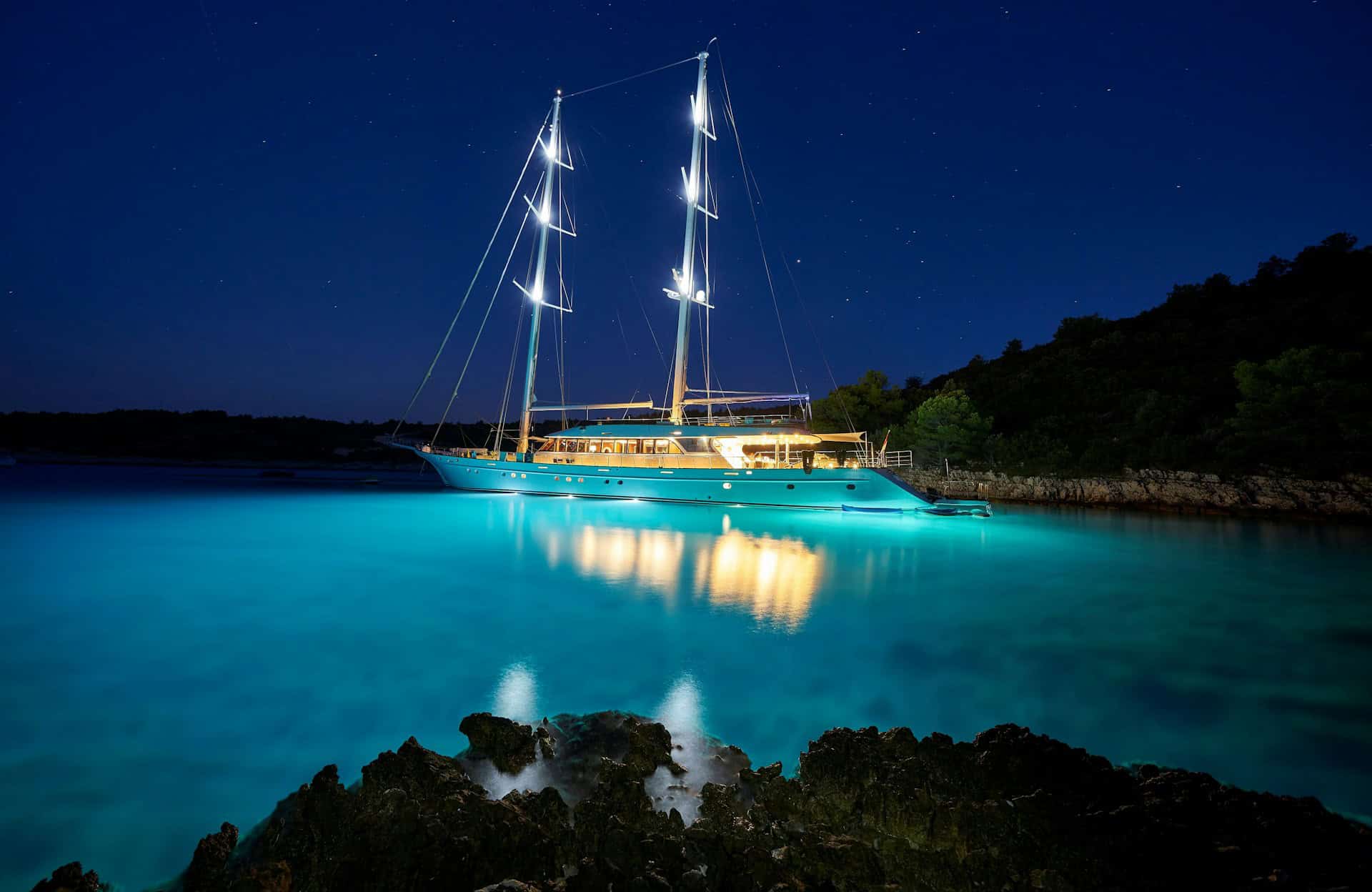
The decision to purchase a superyacht rather than charter is one of the most significant lifestyle investments a UHNWI individual can make — and one of the most complex. The vessel itself is only the beginning of a commitment that encompasses crew, maintenance, compliance, insurance, and the ongoing management of an asset whose operational demands rival those of a small business.
This is the guide that a trusted adviser would provide before the conversation with any broker begins.
New Build vs. Existing Vessel
The new build route — commissioning a vessel from a shipyard to a custom specification — offers complete design freedom at a cost that typically runs 20-30% above the price of a comparable existing vessel, with a delivery timeline of 24-48 months from contract signature.
The existing vessel route — purchasing from current owners through a broker — offers immediate availability, a known operational history, and pricing that reflects the market rather than the aspirational. The due diligence process for an existing vessel must include a full condition survey by an independent marine surveyor, a technical inspection of all engineering systems, a review of maintenance records and classification society status, and a crew interview process.
The Running Cost Calculation
A superyacht costs approximately 10-15% of its purchase price annually to operate. A 50-meter vessel purchased for €15 million will cost €1.5-2.25 million per year to maintain, crew, insure, and berth — before any fuel expenditure during use. On a 70-meter vessel at €35 million, annual operating costs may reach €4-6 million.
These numbers are not deterrents for buyers at this level. They are planning inputs, and they must be modeled honestly before the purchase contract is signed.
The Crew Architecture
A 50-meter yacht requires a captain, first officer, chief engineer, bosun, two deckhands, chief stewardess, and two to three stewards at minimum — a crew of nine to twelve. The captain is the most critical hire, and the one who will largely determine the character of the entire crew. A captain’s salary at this level runs €100,000-€180,000 annually, with the full crew cost representing €400,000-€700,000 per year.
The best captains are placed through specialist maritime recruitment agencies and are rarely available at short notice.
Charter Income: The Offset Strategy
Many first-time superyacht owners deploy their vessel on the charter market during periods of non-use — typically 12-20 weeks annually — to offset running costs. A well-managed charter programme on a well-maintained 50-meter vessel can generate €1.5-3.5 million annually, covering a significant proportion of operational expenses.
The Management Company
Most superyacht owners engage a professional yacht management company — a specialized firm that handles crew employment, maintenance oversight, insurance management, classification compliance, and financial administration on behalf of the owner. This is not optional overhead; it is the operational infrastructure without which the ownership experience rapidly becomes administratively overwhelming.
At Hype Luxury, we connect clients considering purchase with the specialist advisers, brokers, and management companies who navigate this process with integrity — because an informed buyer makes a better owner.