

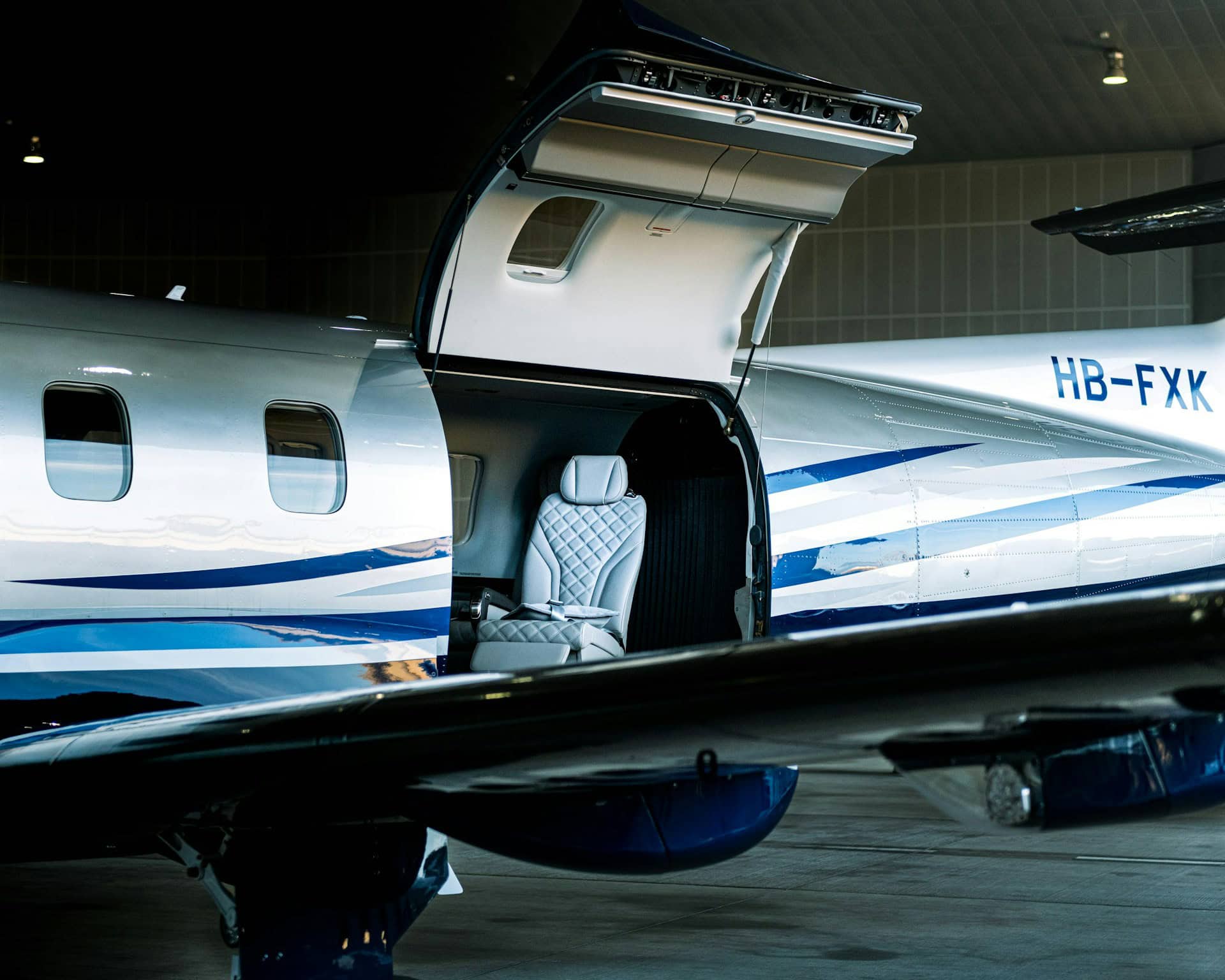
The private jet ownership decision is one of the most financially significant a UHNWI individual can make — and one of the most frequently made on incomplete information. The appeal of ownership is powerful: your aircraft, your schedule, your standards, available always. The reality is more complex.
The True Cost of Aircraft Ownership
A Gulfstream G700 costs approximately $78 million to purchase. But the purchase price is the beginning, not the total cost. Annual fixed costs — crew salaries, insurance, hangar fees, maintenance programs, and management fees — typically run $3-5 million annually for an aircraft at this level, regardless of utilization.
Variable costs — fuel, catering, landing fees, ground handling — add approximately $10,000-$15,000 per flight hour, depending on routing and services.
An owner who flies 300 hours annually is paying effectively $20,000-$25,000 per flight hour in all-in costs. A charter client flying 300 hours annually through a platform with preferred operator access and volume pricing is paying approximately $8,000-$14,000 per flight hour, depending on aircraft type.
The Depreciation Question
Aircraft depreciate. A Gulfstream G700 purchased today will be worth significantly less in ten years — both in absolute terms and relative to whatever represents the state of the art in 2035. The charter client bears no depreciation exposure.
The Operational Obligation
Owning an aircraft means managing it: crew scheduling and welfare, maintenance compliance, hangar agreements, insurance renewal, and the complex regulatory landscape that varies by the jurisdictions in which the aircraft operates. This is a full-time management function. Most UHNWI owners employ a dedicated aircraft manager — an additional cost that is rarely factored into initial ownership projections.
When Ownership Makes Sense
Ownership becomes economically rational at approximately 400-500 flight hours annually, when the fixed cost per hour begins to approach charter rates and when the flexibility and customization advantages of ownership justify the premium.
For principals who travel exclusively from a small number of bases, who require an aircraft configured to extremely specific standards, or for whom the security and privacy of a known aircraft and crew is a genuine operational requirement rather than a preference, ownership has clear advantages.
The Fractional Middle Ground
Between full ownership and charter sits fractional ownership — programs offered by NetJets, Flexjet, and others — which provide a guaranteed share of an aircraft, consistent crew relationships, and priority availability, at a capital cost and per-hour rate that sits between ownership and spot charter.
At Hype Luxury, we help clients model this decision honestly — because the right answer depends entirely on individual circumstances, and we would rather provide clarity than a charter booking that is the wrong solution.