

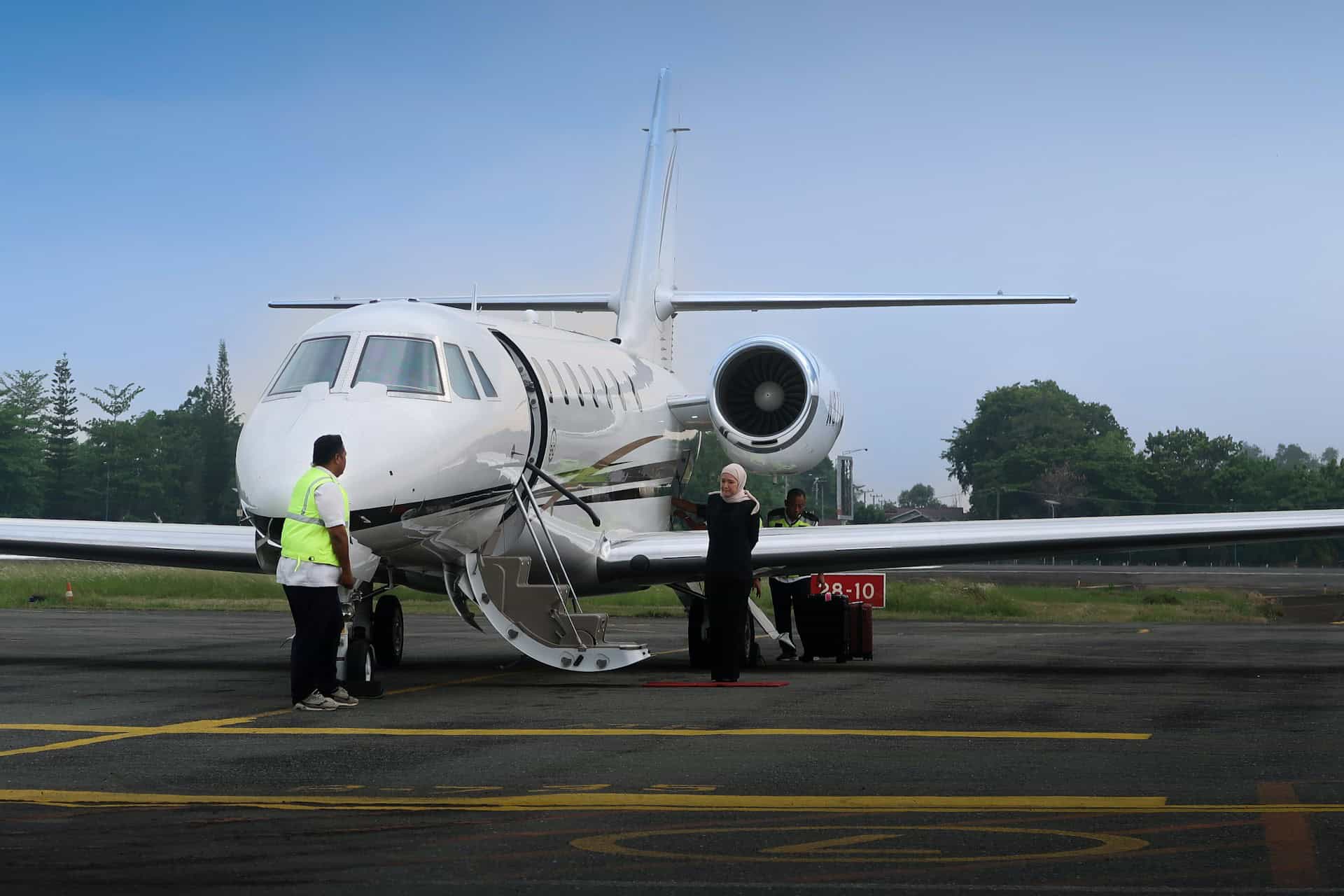
There is a category of private flight that the industry rarely advertises but every experienced flyer knows by name: the empty leg. It is the closest thing private aviation has to a hidden door — and walking through it can deliver a Gulfstream or a Global on terms that look, at first glance, impossible.
The mechanics are simple. Charter aircraft do not live where their passengers do. When a principal flies New York to Aspen on a Friday, the jet often returns empty to its base or repositions for the next charter — and that empty repositioning leg is a cost the operator would prefer to recover. Selling it at a steep discount to a flexible second client converts a loss into revenue. For the buyer, the result is a private jet at a fraction of standard charter pricing.
How steep is the discount? In favourable conditions, empty legs sell for fifty to seventy-five percent below a comparable on-demand charter. A heavy jet across the Atlantic that might list at six figures full price can occasionally appear as an empty leg for the cost of a family’s worth of commercial first-class tickets. The catch — and there is always one — is flexibility. Empty legs are not your schedule; they are the operator’s. The flight goes when the aircraft needs to reposition, between the airports it needs to connect, often on twenty-four to seventy-two hours’ notice.
This is why the empty-leg market rewards a particular kind of flyer. The retired collector with a flexible diary. The family with a holiday home and a moveable arrival date. The young entrepreneur who can write the trip around the flight rather than the flight around the trip. For them, the empty leg is a strategic instrument. For the executive flying to a Monday board meeting, it is rarely the answer.
The professionals’ playbook breaks into three habits. First, work through a serious broker or operator relationship rather than an app, because the best empty legs are filled before they are ever publicly listed — a phone call to a desk that knows your patterns will outperform any feed. Second, define your flexibility in advance: a corridor of acceptable airports, a window of acceptable dates, an aircraft type you are happy to accept. The broader the brief, the better the offers. Third, be ready to commit fast. Empty legs are not browse-and-decide; the right one will be gone in an hour.
There are honest limitations. Empty legs cannot be relied upon for time-critical travel. They occasionally cancel or reposition if the operator’s primary charter shifts. And the pool is unevenly distributed — strong on transatlantic and trans-European corridors, thinner on niche routings. The smart approach blends them: standard charter or jet card for the unmissable trips, empty legs for the leisure and discretionary travel where flexibility is genuinely on the table.
The deeper insight is what the empty-leg market reveals about private aviation itself. The industry is not, as many assume, the preserve of unlimited budgets. It is a sophisticated marketplace with surplus, arbitrage and intelligent buyers — and the travellers who understand it well are flying private more often, for less, than anyone outside the industry would guess.
The door is open. Most people simply never knew to push it.