

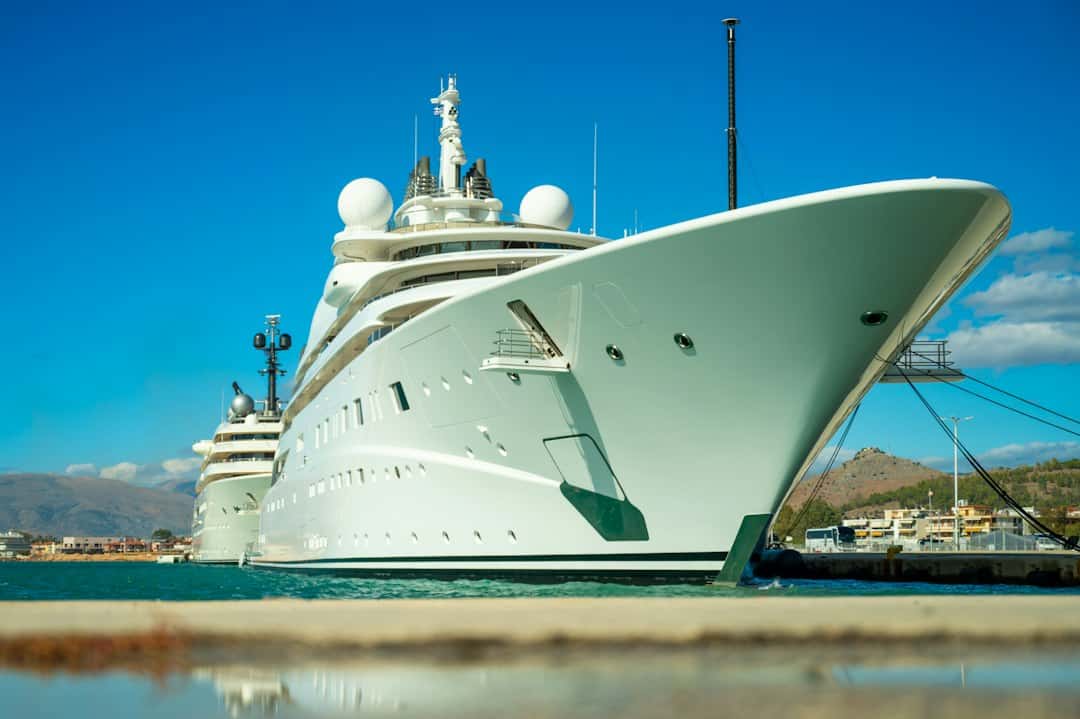
Beyond Size: What Defines the Giga-Yacht Category
The term giga-yacht is informally applied to vessels exceeding 90 metres, though some classification systems set the threshold at 100 metres. What distinguishes the category is not just length but the scope of engineering ambition: these are vessels where a single build project can run to $300 million or more, engage naval architects, interior designers, structural engineers, and propulsion specialists for three to seven years, and produce a floating asset with the mechanical complexity of a commercial ship combined with the finish quality of a private residence.
Hybrid and Hydrogen Propulsion
Environmental regulation and principal preference are converging to accelerate the adoption of hybrid diesel-electric and, increasingly, hydrogen fuel cell propulsion systems. Hybrid configurations allow superyachts to operate in zero-emission mode within protected areas and at anchor, significantly reducing noise, vibration, and exhaust. Several yards — including Lürssen, Feadship, and Benetti — now offer factory-fit hybrid packages on vessels above 70 metres. Pure hydrogen propulsion remains a five-to-ten year horizon for commercial viability at scale, but concept studies by Sinot and Rossinavi have generated significant UHNW owner interest.
Battery Technology and Energy Density
The practical limitation of hybrid operation has historically been battery energy density — large banks add significant weight and take up volume that competes with guest accommodation. Advances in solid-state battery technology are narrowing this constraint, and naval architects are increasingly designing battery rooms into the structural plan from the outset rather than retrofitting them.
Wellness and Medical Facilities
Post-pandemic, UHNW owners have dramatically increased their specifications for onboard wellness infrastructure. Full-length pools, spa decks with treatment rooms, hyperbaric chambers, and — on vessels above 100 metres — fully equipped medical bays with surgical capability and telemedicine links to specialist hospitals have all appeared in recent build specifications. The architectural challenge is integrating these facilities without sacrificing exterior deck space or visual flow through the vessel.
Exterior Design: Beaches and Glass
Two design elements dominate current aesthetic trends. Beach clubs — convertible stern areas that fold out to water level to create a direct connection between the yacht and the sea — have become near-universal on new builds above 50 metres. Floor-to-ceiling glazing in main saloons, made possible by advances in structural glass engineering, is the other dominant motif, blurring the boundary between interior and exterior and maximising natural light penetration below decks.
Autonomous and Remote Operations
Class societies including Lloyd’s Register and Bureau Veritas are developing notation frameworks for degrees of autonomous operation on superyachts. In practical terms, this currently means advanced dynamic positioning, automated collision avoidance, and remote monitoring of machinery systems — not driverless yachts. However, the infrastructure investment required to support future autonomy is already influencing bridge design and communication system specifications on vessels being ordered now.
Hype Luxury provides bespoke travel and concierge services for UHNW principals. Enquire at hype.luxury.