

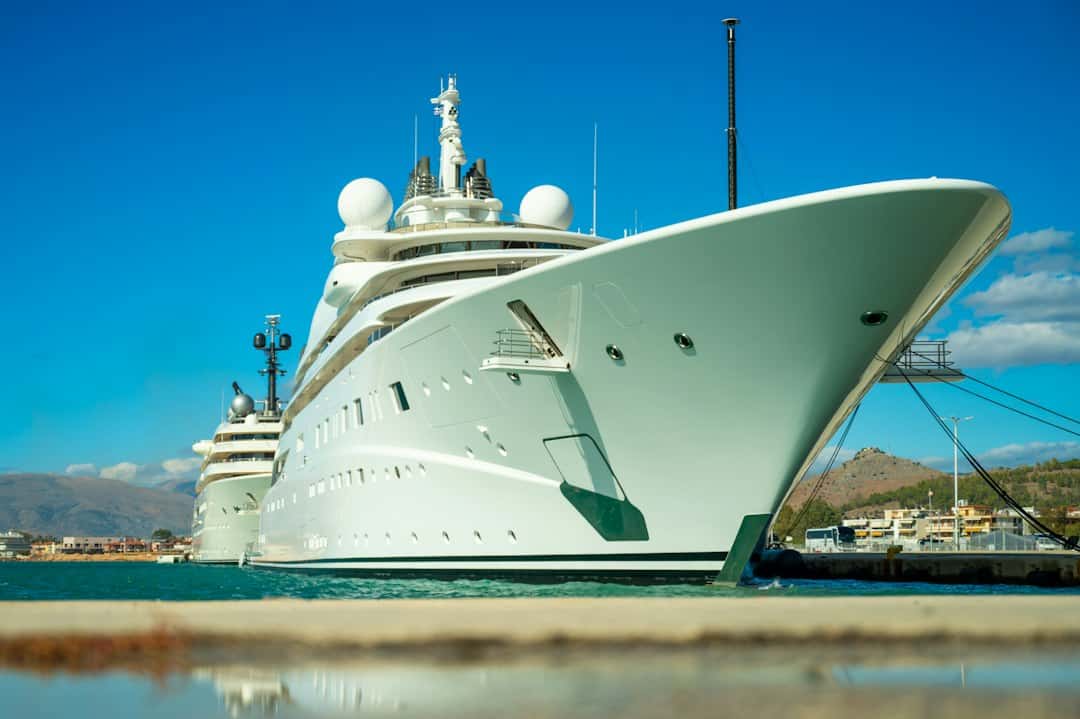
The Hidden Complexity of Superyacht Ownership
A superyacht above 40 metres is, by any reasonable measure, a small shipping company. It employs a crew of 10–30, operates under international maritime law, requires classification society oversight, and generates annual operating costs of 10–15% of its capital value. Principals who approach ownership as a consumer purchase rather than an asset management challenge consistently overspend and underperform on their investment thesis.
What a Yacht Management Company Actually Does
Professional yacht management companies assume responsibility across three functional domains. Technical management covers maintenance schedules, dry-dock planning, flag state compliance, and class renewal surveys. Commercial management handles charter marketing if the vessel is placed in the charter market, crew payroll, insurance placement, and provisioning contracts. Operational management ensures the yacht is crewed, provisioned, and positioned correctly for the principal’s itinerary at all times.
The ISM Code and Flag State Obligations
Yachts over 500 GT trading commercially must comply with the International Safety Management (ISM) Code. Even for private yachts, flag states including the Cayman Islands, Marshall Islands, and Malta impose safety management obligations that require documented procedures, drill records, and annual audits. A competent management company maintains these systems as a matter of course; an inexperienced one treats them as administrative burdens and creates liability exposure for the owner.
Crew: The Single Largest Operating Cost
Crew costs — salaries, social insurance, flights, uniform allowances, and training — typically represent 40–50% of annual operating budget. STCW certification requirements, MLSC compliance for crew contracts, and the reputational risk of a high-turnover crew all demand active management. The best management companies maintain proprietary crew databases, conduct psychometric assessments of key appointments, and manage succession planning for captains and chief engineers.
Cost Transparency and Reporting
UHNW principals should expect monthly management accounts, quarterly technical reports, and annual audited cost statements from their management company. Any management arrangement that does not provide line-item cost visibility — fuel, provisioning, port dues, crew overtime — should be treated as structurally misaligned. The management fee (typically 10–15% of operating costs, or a fixed monthly retainer) should be clearly separated from pass-through expenses.
In-House vs Outsourced Management
Some principals with multiple vessels or strong institutional support staff choose to bring management in-house, employing a shore-side superintendent and financial controller directly. This model offers greater control and eliminates management company margin but requires significant oversight investment. For single-vessel owners without dedicated maritime staff, outsourced management almost always delivers better outcomes and lower total cost.
Hype Luxury provides bespoke travel and concierge services for UHNW principals. Enquire at hype.luxury.