

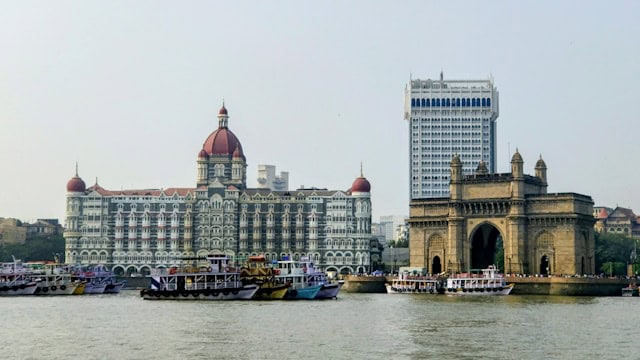
Mumbai does not feel like any other UHNW city in Asia, and that is its defining advantage.
Where Tokyo whispers and Singapore organises, Mumbai performs. The city operates at a tempo and density that produces a wealth culture genuinely unlike anything else in Asia — younger, louder, more dynastic, more public, and increasingly more global than any of its peer cities recognise. India’s financial capital has become Asia’s most dynamic UHNW market, and the mobility patterns of its principals reveal exactly what kind of wealth is being made here.
The macro setting is staggering. Indian wealth has grown at rates that have repeatedly outpaced economists’ forecasts, and the concentration of that wealth in Mumbai — along with Delhi and Bangalore — has made the city the engine of one of the world’s most important new luxury markets. The number of UHNW Indian households has multiplied within a single decade. Their global mobility patterns now connect Mumbai to London, Dubai, New York, Singapore and the Mediterranean as a routine matter of personal infrastructure.
What makes Mumbai distinctive within Asia is the dynastic dimension. India’s wealth is heavily concentrated in business families that span generations, and the mobility logic that serves these families differs fundamentally from the model that serves first-generation Asian founders. The matriarch, the patriarch, the children, the grandchildren — all are stakeholders, all travel, all have preferences that must be accommodated. The Indian UHNW family is plural, where the Tokyo equivalent is often singular.
The mobility consequences are visible. Private aviation serving Indian wealth is heavily oriented toward multi-passenger configurations, with larger-cabin aircraft preferred for the routine intercity flights that Indian families undertake — Mumbai to Delhi, Mumbai to Bangalore, Mumbai to Goa, and increasingly Mumbai to the Maldives, Dubai and Singapore. The fleet types that win Indian charter business tend to be the heavy and ultra-long-range jets, because the trips are large-group and the destinations are often international.
The wedding economy, covered in earlier writing, is its own gravitational force. A serious Indian wedding can deploy more mobility infrastructure than most international summits, and Mumbai is the planning capital from which most of this orchestration emanates. The wedding planners, the family offices, the mobility coordinators who serve this market operate at a scale of logistical complexity that has produced some of the most capable luxury mobility operators in Asia.
The supercar culture, often noted by international observers, has become one of the city’s signature features. Mumbai’s elite young — heirs, founders, Bollywood stars and the financial-services rising class — drive cars that would be respected in Monaco or Dubai. The roads constrain how the cars are used, but the ownership and rental markets are deep and growing. Hype Luxury’s Mumbai fleet has been shaped specifically by this demand profile, with vehicle selection reflecting the particular preferences of the city’s clientele.
The yachting story is more complicated and more interesting. Mumbai’s waters are not Monaco’s. Domestic yachting culture exists at a modest scale relative to the city’s wealth, but the international yachting footprint of Mumbai-based families is one of the most rapidly growing in the world. Mumbai principals charter heavily in the Mediterranean summer, in the Caribbean for New Year, in the Maldives for the winter escape, and increasingly in the South Pacific for the more adventurous. The cosmopolitan reach of Mumbai’s UHNW class is striking — these are families who treat the global yachting fleet as their own.
The Bollywood dimension cannot be ignored. India’s film industry concentrates an extraordinary share of high-visibility wealth in Mumbai, and the mobility serving the city’s celebrity class — actors, directors, producers — has its own particular requirements around security, paparazzi management and rapid scheduling. The operators who serve Bollywood successfully tend to develop capabilities that translate well to broader UHNW service, because the demands of the entertainment elite anticipate many of the demands the broader wealth class eventually develops.
For Hype Luxury, Mumbai has been our home market and our most demanding training ground. The standards required to serve Indian principals at the level they expect — across cars, jets, yachts and integrated service — have shaped every aspect of our operating model. The discipline we apply globally was forged here.
The deeper truth Mumbai represents is that Asian luxury is no longer downstream of Western luxury. The mobility patterns of Mumbai’s UHNW class — global, dynamic, dynastic, integrated — are increasingly the template that other Asian cities follow rather than the exception. The next decade of Asian wealth will be defined by which cities learn from Mumbai’s velocity, not by which cities catch up to Tokyo’s restraint.
The financial capital of India is, increasingly, the lifestyle capital of Asian UHNW. The world is paying attention.