

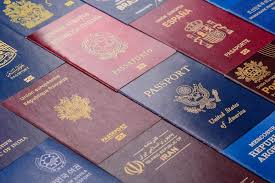
Say it in a room full of billionaires and watch them nod — slowly, carefully — the way people nod when someone finally says the thing everyone already knows.
A second passport is not disloyalty. It is not tax evasion dressed in leather. It is not the moral failure the editorial class reaches for when they need a villain.
It is optionality. And in 2026, optionality is the only asset class that cannot be confiscated, taxed, or inflated away.
What a Passport Actually Is
Strip away the symbolism and a passport is a document issued by a government that grants you access to the world on that government’s terms.
Those terms change.
Governments fall. Currencies collapse. Borders close — as an entire generation discovered in 2020 with a speed that no geopolitical model had predicted. The person with one passport in that moment had one option. The person with two had a conversation. The person with three had a strategy.
The ultra-wealthy did not panic in 2020. They relocated. Because they had already made the decision — quietly, without announcement — that sovereign risk was a real variable and not a theoretical one.
Why the Outrage Is Manufactured
The public anger around citizenship-by-investment programmes follows a predictable script.
A newspaper runs a headline. A politician calls for an inquiry. The inquiry produces a report. The report is shelved. The programme continues — because every government running one understands that mobile capital is not the enemy of national prosperity. It is often the engine of it.
Malta. Portugal. The UAE. St. Kitts. Vanuatu. These are not rogue states selling sovereignty to criminals. They are small, rational economies that identified a comparative advantage — political stability, geographic position, tax architecture — and priced it correctly.
The countries loudest in their condemnation are, without exception, the ones whose own golden visa programmes are either oversubscribed or quietly under review.
Outrage, in this arena, is almost always competitive.
The Argument Nobody Makes
Here is what the conversation almost never includes.
The people acquiring second passports are, in the majority, not fleeing accountability. They are insuring against instability in countries where accountability is selectively applied. Where the rules that govern the wealthy are rewritten based on political cycles rather than legal principle. Where being successful makes you a target rather than a contributor.
A second passport is not a statement about your first country.
It is a statement about your first country’s government.
There is a difference. And conflating the two is precisely how the guilt campaign sustains itself.
What the Intelligent Approach Looks Like
The families who do this well do not do it reactively.
They do it as architecture. A primary residence where their business operates. A secondary jurisdiction with a more favourable tax treaty structure. A third passport for visa-free movement across the corridors that matter — the Gulf, Southeast Asia, Europe.
They fly between these nodes on aircraft that do not require them to queue, explain, or wait. They make decisions from altitude, in motion, with full information.
This is not extravagance. It is engineering.
The world’s most successful people have always understood that geography is a variable — not a fixed condition. The only thing that has changed is how clearly the rest of the world can now see them moving.
Sovereignty is not given. It is structured.