

Most private jet clients choose an aircraft the way they choose a hotel suite: by photographs. This is understandable and almost always suboptimal. The right aircraft is determined by the mission — sector length, runway constraints, passenger count, and what actually happens in the cabin during the flight.
The ultra-long-range tier
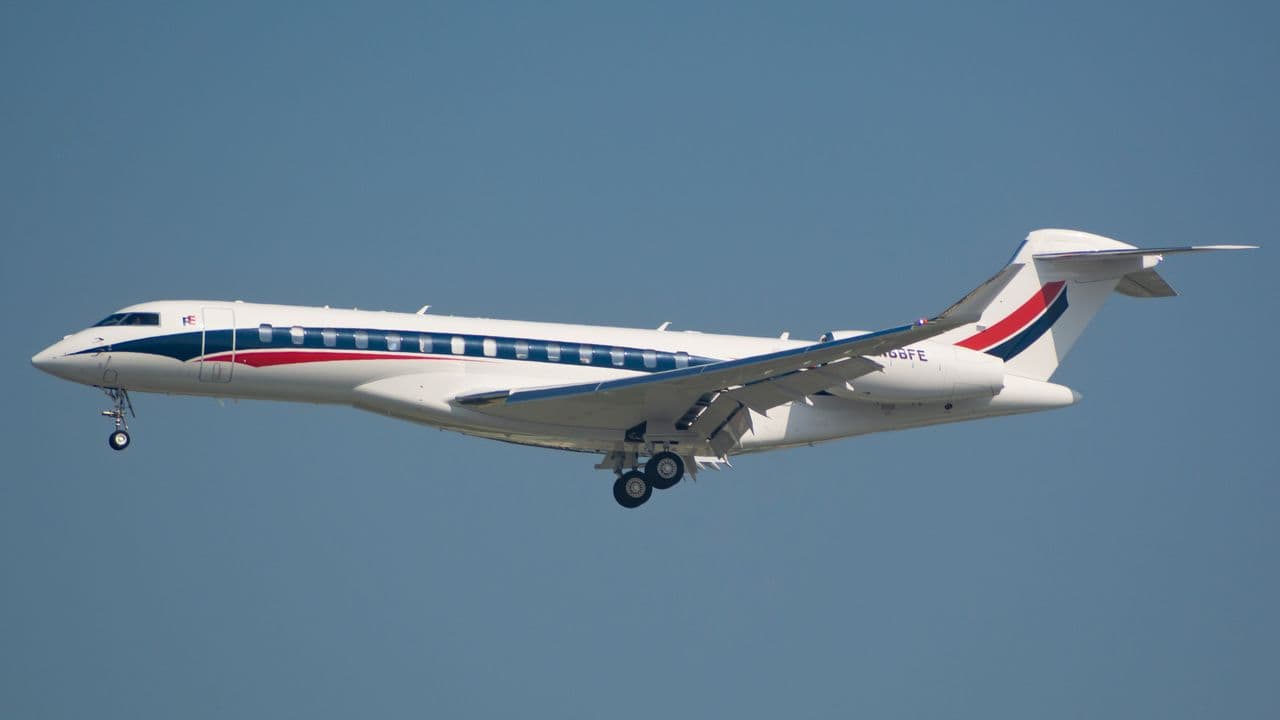
The Bombardier Global 7500 offers the longest cabin in the class, configured across four distinct living zones — typically a club section, a conference or dining area, an entertainment space, and a genuine private stateroom with a rear en-suite. For a principal flying Dubai to New York or Singapore to London, the meaningful advantage is that sleep happens in a bed, not a converted seat.
The Gulfstream G700 competes directly, with an emphasis on cabin altitude and air quality — a lower cabin pressure and higher fresh-air exchange rate, which materially affects how a passenger feels on arrival after fourteen hours. For executives flying directly into a board meeting, this is not a luxury detail. It is the difference between arriving able to work and arriving needing to recover.
The Dassault Falcon 8X takes a different position: a trijet configuration, exceptional short-field performance, and the ability to operate into airports that its competitors cannot. If your itinerary includes London City, Courchevel-adjacent alpine fields, or constrained regional airports across Asia, the 8X buys you access rather than cabin volume.
The large-cabin workhorses
The Gulfstream G650ER remains the most widely deployed ultra-long-range aircraft in the world, and its availability across charter fleets is its quiet advantage — you can generally find one. The Global 6000 offers similar transcontinental capability with a cabin that suits eight to twelve passengers travelling as a working group rather than as individuals.
The regional decision
For sectors under four hours — Dubai to Mumbai, London to Nice, Riyadh to Cairo — an ultra-long-range aircraft is expensive capability you will not use. A super-midsize such as the Challenger 3500 or Praetor 600 delivers stand-up cabin height, a proper galley, and full baggage capacity at a materially lower hourly rate.
The most common error we see is over-specifying short sectors and under-specifying long ones.
The questions that actually determine the answer
How many passengers, and are they travelling together or working separately? Will anyone need to sleep? Are you carrying skis, golf clubs, or art? Does the destination airport have runway or slot constraints? Is there a technical stop, and does it fall in a jurisdiction you would prefer to avoid?
A charter partner who does not ask these questions before quoting is quoting on price alone — which means the aircraft you receive will be the cheapest one that fits the passenger count, not the right one for the mission.