

Rent Luxury Cars, Jets and Yacht
Hype Luxury Blog
No Result
View All Result
  • Blog
  • News & Press
  • Videos
  • Write For Us
  • Login
  • Blog
  • News & Press
  • Videos
  • Write For Us
  • Login
Hype Luxury Blog
No Result
View All Result
Hype Luxury Blog
No Result
View All Result

The Bombardier Global 8000 Has Arrived: Inside the World’s New Fastest Private Jet

The Bombardier Global 8000 Has Arrived: Inside the World’s New Fastest Private Jet
Previous Post

The Geneva, Pebble Beach and Goodwood Effect: How Concours Culture Drives the Luxury Car Market

Next Post

The Hidden Math of Yacht Charter: How a Week Aboard Actually Compares to Five-Star Hotels

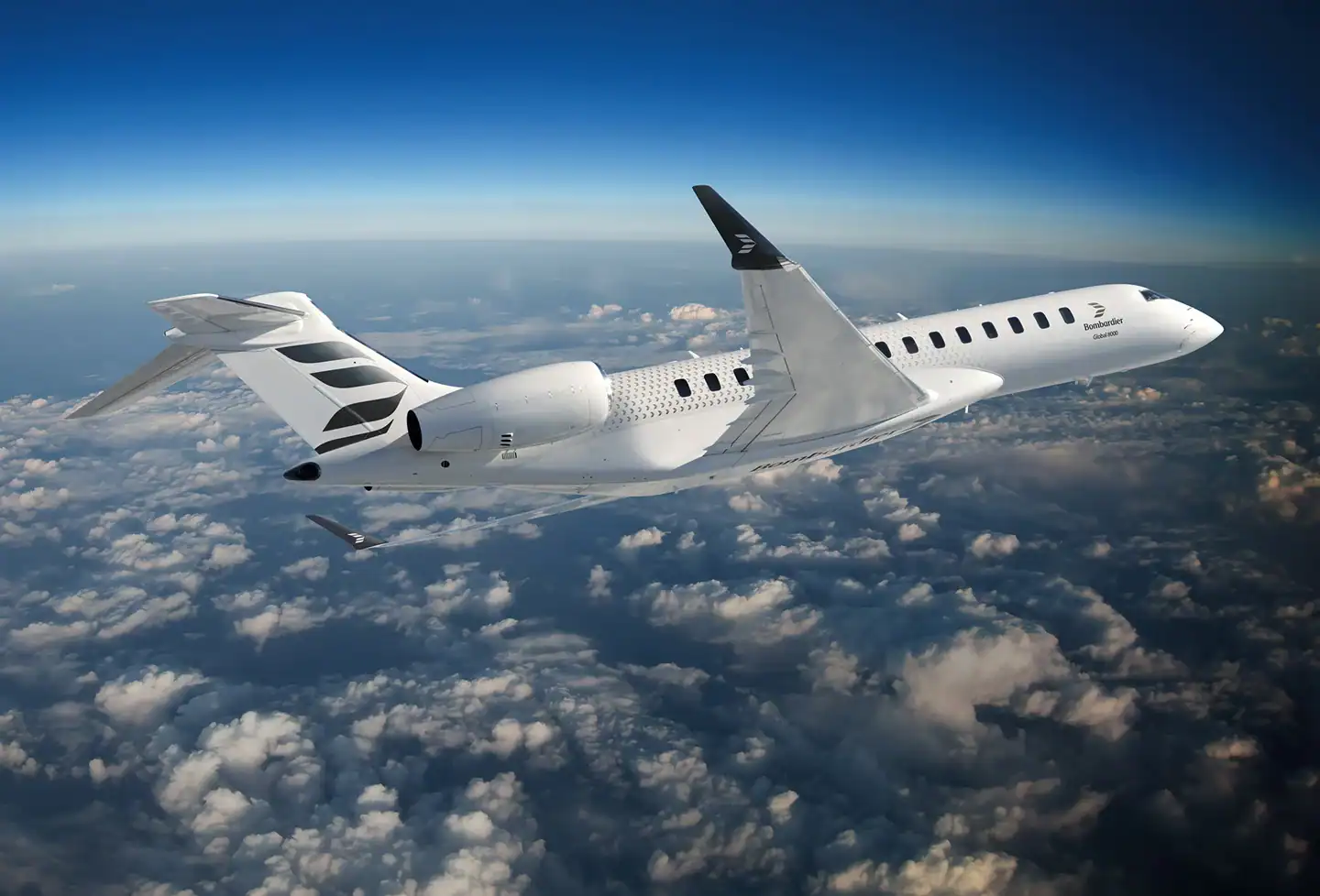
For nearly a decade, the ultra-long-range private jet conversation was a two-horse race between the Gulfstream G700 and the Bombardier Global 7500. Both extraordinary aircraft. Both, in their way, the answer to the question of how to cross the planet without compromise. And then, in 2025, Bombardier delivered the Global 8000 — and the conversation shifted again.

The headline number is the one everyone quotes: a top speed of Mach 0.94, which makes the Global 8000 the fastest civilian aircraft since Concorde. For long-haul private flying, that velocity translates into something more meaningful than bragging rights. London to Singapore non-stop in under thirteen hours. Dubai to Los Angeles direct. New York to Hong Kong without a fuel stop. The map of the world shrinks, and the calendar of the global principal expands.

But speed is the easy story. The harder, more consequential story is the cabin. The Global 8000 carries four distinct living zones across more than 16 metres of cabin length, with the lowest cabin altitude in business aviation — equivalent to roughly 2,900 feet at a cruise of 41,000 feet. The medical literature on cabin altitude and fatigue is unambiguous: a lower cabin altitude means a passenger steps off the aircraft genuinely rested, with cognitive function preserved through long flights. For executives flying to make decisions on landing, this is not a luxury specification. It is a productivity one.

The four-zone layout reflects how the modern principal actually uses ultra-long-range time. The forward club seating handles the working hours — conferencing, document review, conversations with the team aboard. The conference and dining zone handles the meals and the meetings. The entertainment zone handles the unwinding hours. The private suite, with its full bed and en-suite, handles the sleep. A fourteen-hour flight stops feeling like an endurance test and starts feeling like a day with chapters.

The Global 8000’s competitive position is interesting. The Gulfstream G700 remains its closest rival, with comparable range and a cabin many connoisseurs prefer for its width and elegance. The two aircraft will continue to share the ultra-long-range market between them, with brand loyalty and operator availability often deciding individual purchases. What the Global 8000 has done, however, is reset the speed ceiling — and Gulfstream’s response, when it arrives, will define the next chapter of the segment.

For the charter market, the implications are immediate. Operators with Global 8000s in their fleets are commanding premiums and seeing rapid utilisation. Routes that previously required tech stops — Singapore to New York, Sydney to London with a single hop — are opening up as direct charters. Family offices booking annual jet card commitments are increasingly specifying the aircraft type, recognising that the productivity gains compound across a year of flying.

The acquisition economics, for those weighing ownership, run into nine figures by the time a properly specified aircraft is delivered, and the waitlist is years long. For the vast majority of clients — including those who fly more than two hundred hours a year — the better answer remains charter or jet card. The Global 8000 is the ideal aircraft to access on demand: the very best of the long-haul fleet, available when the trip requires it, without the capital lock-up.

The deeper truth the Global 8000 reveals is about how aviation luxury actually advances. It does not advance through gimmicks or finishes. It advances through the unglamorous metrics — cabin altitude, range, speed, reliability — that compound over years of flying into a meaningfully better life for the people aboard.

The world just got smaller. The cabin got better. And the next chapter of ultra-long-range private aviation has begun, at Mach 0.94, with the lights low and the cabin altitude lower still.


Image by: Bombardier

Tags: #Aviation#Bombardier#FlyPrivate#global8000#JetCharter#LuxuryTravel#PrivateAviation#ultralonghaulhypeluxuryprivatejet
Private Aviation, Ground, and Sea: Why the Smartest UHNW Families Use One Relationship, Not Three

Private Aviation, Ground, and Sea: Why the Smartest UHNW Families Use One Relationship, Not Three

July 22, 2026
How Repeat Clients Actually Refer: The Quiet Mechanics of Trust-Based Growth

How Repeat Clients Actually Refer: The Quiet Mechanics of Trust-Based Growth

July 22, 2026
The Case Against Owning: Why Access Is Replacing Asset Ownership Among UHNW Families

The Case Against Owning: Why Access Is Replacing Asset Ownership Among UHNW Families

July 22, 2026
What Happens When Mainstream Platforms Enter Luxury Mobility

What Happens When Mainstream Platforms Enter Luxury Mobility

July 22, 2026
Introduction-Only: Why the Best Luxury Travel Brands Refuse to Advertise

Introduction-Only: Why the Best Luxury Travel Brands Refuse to Advertise

July 22, 2026
The Bombardier Global 8000 Has Arrived: Inside the World’s New Fastest Private Jet
Previous Post

The Geneva, Pebble Beach and Goodwood Effect: How Concours Culture Drives the Luxury Car Market

Next Post

The Hidden Math of Yacht Charter: How a Week Aboard Actually Compares to Five-Star Hotels

For nearly a decade, the ultra-long-range private jet conversation was a two-horse race between the Gulfstream G700 and the Bombardier Global 7500. Both extraordinary aircraft. Both, in their way, the answer to the question of how to cross the planet without compromise. And then, in 2025, Bombardier delivered the Global 8000 — and the conversation shifted again.

The headline number is the one everyone quotes: a top speed of Mach 0.94, which makes the Global 8000 the fastest civilian aircraft since Concorde. For long-haul private flying, that velocity translates into something more meaningful than bragging rights. London to Singapore non-stop in under thirteen hours. Dubai to Los Angeles direct. New York to Hong Kong without a fuel stop. The map of the world shrinks, and the calendar of the global principal expands.

But speed is the easy story. The harder, more consequential story is the cabin. The Global 8000 carries four distinct living zones across more than 16 metres of cabin length, with the lowest cabin altitude in business aviation — equivalent to roughly 2,900 feet at a cruise of 41,000 feet. The medical literature on cabin altitude and fatigue is unambiguous: a lower cabin altitude means a passenger steps off the aircraft genuinely rested, with cognitive function preserved through long flights. For executives flying to make decisions on landing, this is not a luxury specification. It is a productivity one.

The four-zone layout reflects how the modern principal actually uses ultra-long-range time. The forward club seating handles the working hours — conferencing, document review, conversations with the team aboard. The conference and dining zone handles the meals and the meetings. The entertainment zone handles the unwinding hours. The private suite, with its full bed and en-suite, handles the sleep. A fourteen-hour flight stops feeling like an endurance test and starts feeling like a day with chapters.

The Global 8000’s competitive position is interesting. The Gulfstream G700 remains its closest rival, with comparable range and a cabin many connoisseurs prefer for its width and elegance. The two aircraft will continue to share the ultra-long-range market between them, with brand loyalty and operator availability often deciding individual purchases. What the Global 8000 has done, however, is reset the speed ceiling — and Gulfstream’s response, when it arrives, will define the next chapter of the segment.

For the charter market, the implications are immediate. Operators with Global 8000s in their fleets are commanding premiums and seeing rapid utilisation. Routes that previously required tech stops — Singapore to New York, Sydney to London with a single hop — are opening up as direct charters. Family offices booking annual jet card commitments are increasingly specifying the aircraft type, recognising that the productivity gains compound across a year of flying.

The acquisition economics, for those weighing ownership, run into nine figures by the time a properly specified aircraft is delivered, and the waitlist is years long. For the vast majority of clients — including those who fly more than two hundred hours a year — the better answer remains charter or jet card. The Global 8000 is the ideal aircraft to access on demand: the very best of the long-haul fleet, available when the trip requires it, without the capital lock-up.

The deeper truth the Global 8000 reveals is about how aviation luxury actually advances. It does not advance through gimmicks or finishes. It advances through the unglamorous metrics — cabin altitude, range, speed, reliability — that compound over years of flying into a meaningfully better life for the people aboard.

The world just got smaller. The cabin got better. And the next chapter of ultra-long-range private aviation has begun, at Mach 0.94, with the lights low and the cabin altitude lower still.


Image by: Bombardier

Tags: #Aviation#Bombardier#FlyPrivate#global8000#JetCharter#LuxuryTravel#PrivateAviation#ultralonghaulhypeluxuryprivatejet
Private Aviation, Ground, and Sea: Why the Smartest UHNW Families Use One Relationship, Not Three

Private Aviation, Ground, and Sea: Why the Smartest UHNW Families Use One Relationship, Not Three

July 22, 2026
How Repeat Clients Actually Refer: The Quiet Mechanics of Trust-Based Growth

How Repeat Clients Actually Refer: The Quiet Mechanics of Trust-Based Growth

July 22, 2026
The Case Against Owning: Why Access Is Replacing Asset Ownership Among UHNW Families

The Case Against Owning: Why Access Is Replacing Asset Ownership Among UHNW Families

July 22, 2026
What Happens When Mainstream Platforms Enter Luxury Mobility

What Happens When Mainstream Platforms Enter Luxury Mobility

July 22, 2026
Introduction-Only: Why the Best Luxury Travel Brands Refuse to Advertise

Introduction-Only: Why the Best Luxury Travel Brands Refuse to Advertise

July 22, 2026


Hype Luxury Logo


Sign up to our newsletter to stay updated

johnsmith@example.com

Company

  • About
  • News & Press
  • Blog
  • T & C
  • Privacy

Contact

  • Contact
  • Partnership
  • Help

Social

  • Instagram
  • Youtube
  • LinkedIn
  • Facebook
  • Twitter
No Result
View All Result
  • Home
  • News & Press
  • Videos
  • Write For Us
  • Login
  • RENT LUXURY CARS
  • Login
  • Sign Up